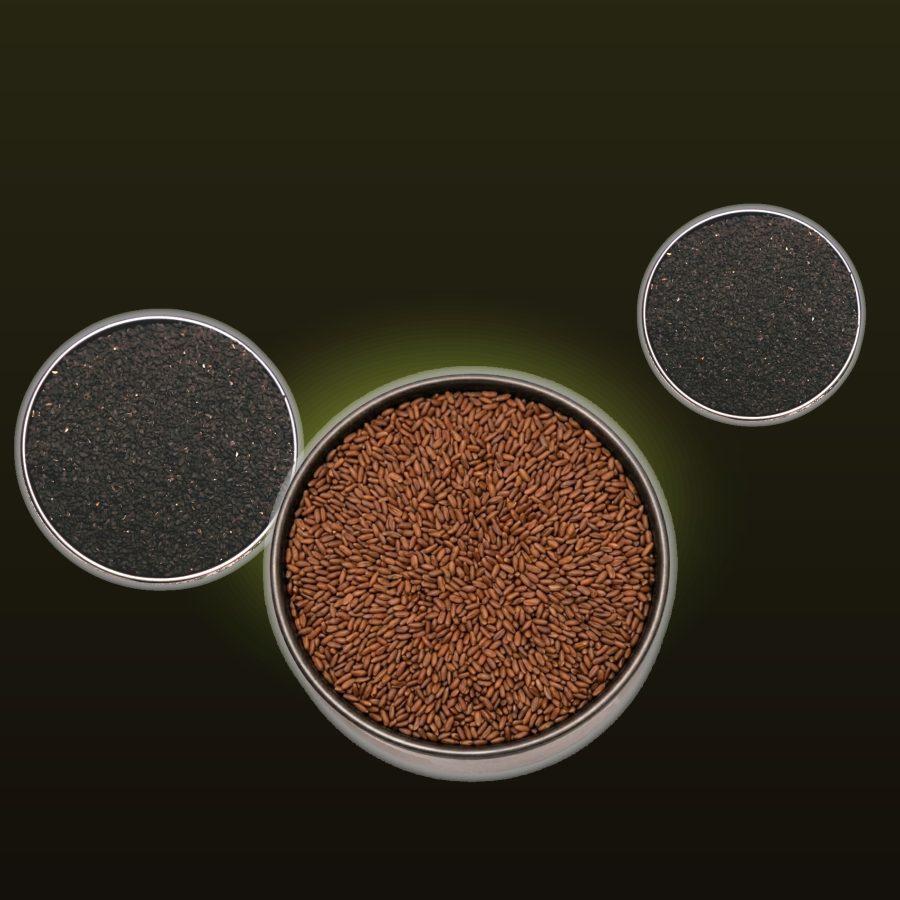
Ask for onion seeds in an English-speaking shop and you will be handed kalonji, which comes from a plant in the buttercup family and has never been near an onion. The name is a two-hundred-year-old mistake that nobody has managed to undo.
Short answer: Kalonji is the seed of Nigella sativa, a flowering plant unrelated to onions. The English name 'onion seed' is a mistranslation that has stuck. It tastes faintly of oregano and black pepper with a bitter edge.
What it tastes like
Kalonji is hard to describe and easy to recognise. The nearest honest description is oregano crossed with black pepper, with a distinct bitterness underneath and a faint smokiness when it hits hot oil.
That bitterness is the thing to respect. Kalonji in reasonable quantity is aromatic and interesting; kalonji overdone makes a dish taste medicinal, and it cannot be cooked out.
It is also one of the spices that genuinely transforms on heat. Raw kalonji is sharp and bitter; thirty seconds in hot oil and it turns nutty and rounded. Almost every traditional use involves that tempering step, and skipping it is why kalonji sometimes tastes wrong to people trying it for the first time.
Where it belongs
On naan and kulcha. The classic, and the use most people know. Scattered on before baking.
In achar. A standard component of most North Indian pickle masalas, where the bitterness is a counterweight to the oil and salt.
In panch phoron. The Bengali five-spice, alongside jeera, methi, saunf and rai, used whole in hot oil at the start of a dish.
Tempered into dal and sabzi. A quarter teaspoon in the tadka, especially with aloo, baingan or kaddu.
Where it does not belong is in anything sweet, and in any quantity above about half a teaspoon for a dish serving four.
The oil, and the claims
Kalonji oil is sold widely with a long list of claims attached - immunity, blood sugar, blood pressure, asthma, hair, weight. The active compound usually named is thymoquinone.
The honest position: there is real research interest in thymoquinone, mostly laboratory and small human trials, with some genuinely interesting findings and nothing approaching settled evidence for any of the big claims. It is an area people are studying, not a conclusion.
What that means practically: kalonji is a good spice and using it in food is a pleasant thing to do. Taking kalonji oil daily as a treatment for a condition is a decision to discuss with a doctor, particularly if you are already on medication for blood sugar or blood pressure, because the plausible mechanisms are exactly the ones that could interact.
Buying and keeping it
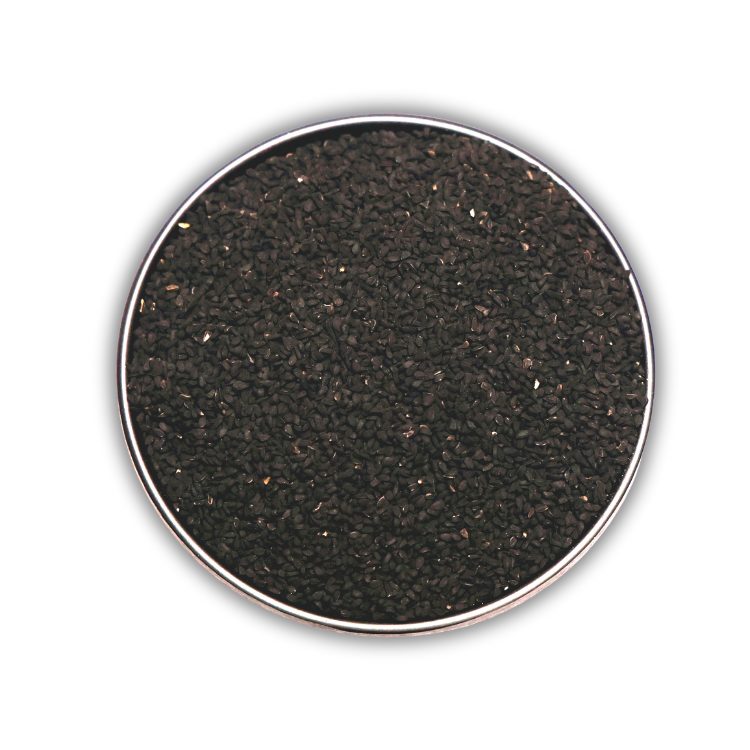
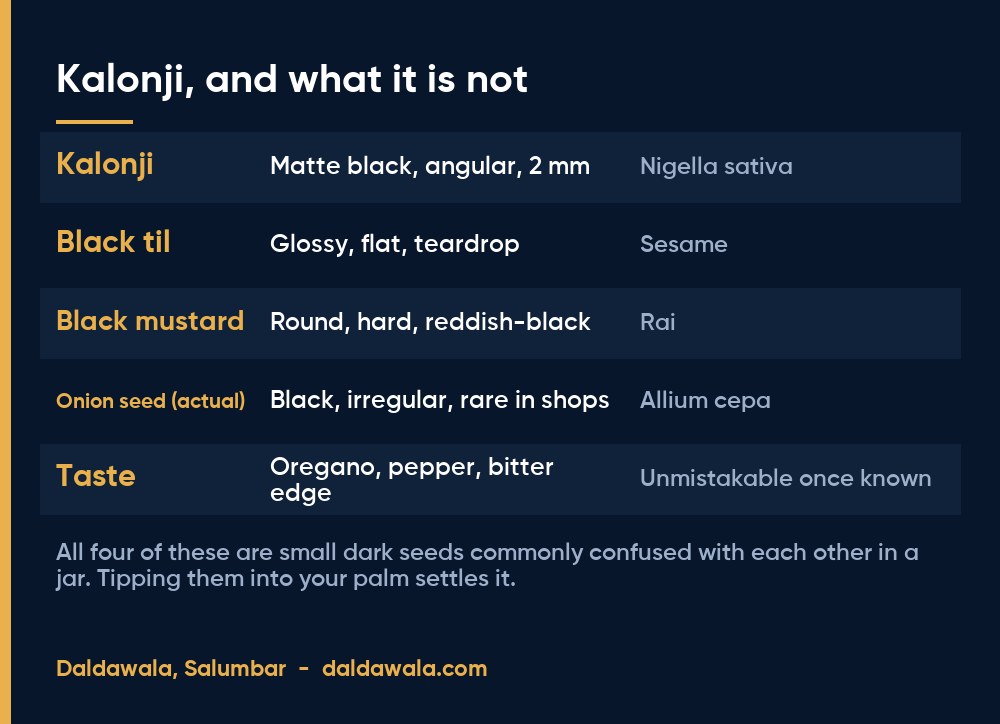
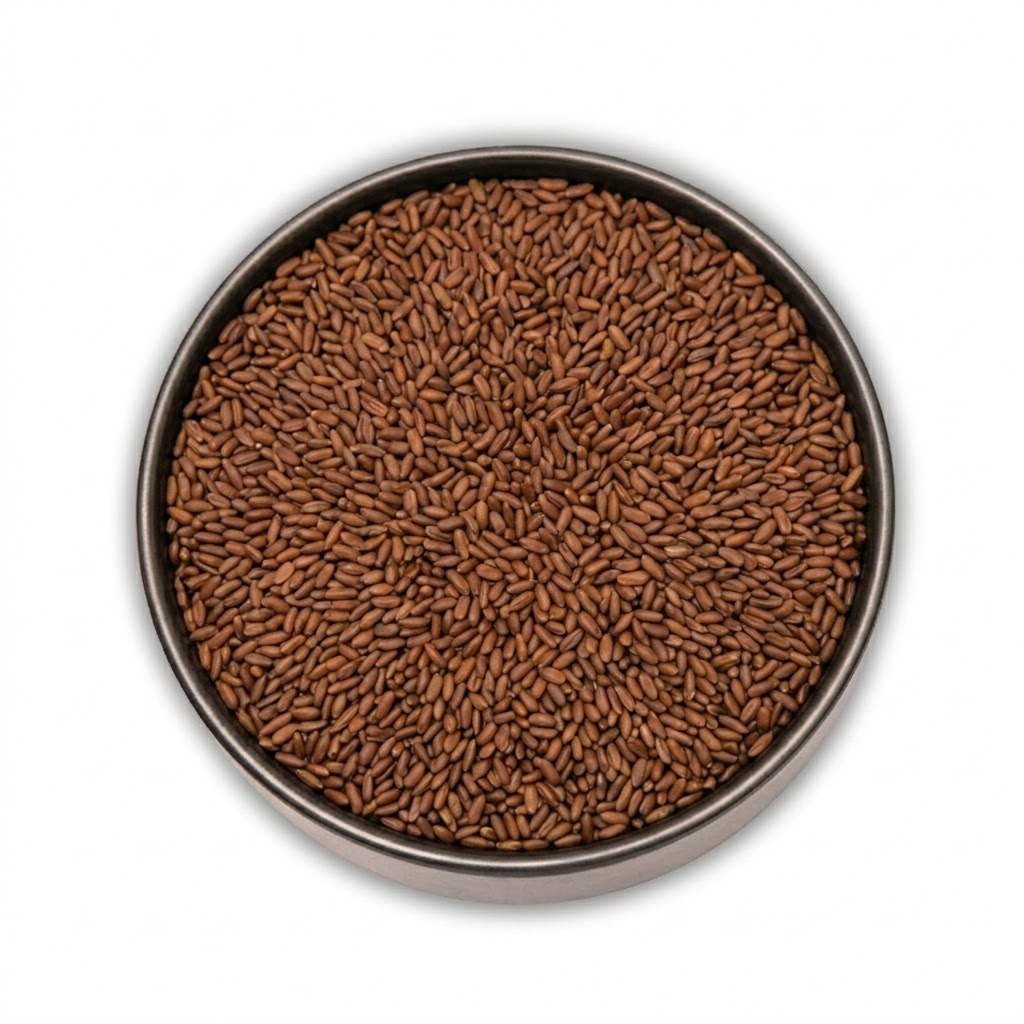
Look for seeds that are genuinely matte black rather than glossy, and angular rather than round - kalonji is a small irregular tetrahedron, not a sphere. A glossy, uniform, round black seed in the jar is something else.
Crush a few between your fingers. Fresh kalonji releases that oregano-pepper smell immediately. Nothing means old.
It keeps well - a year and more in an airtight jar away from heat, because the seed coat is doing its job. Buy whole; there is no reason to buy it ground and it is not used ground in any traditional preparation.
Buying it in Salumbar
Our seeds is on this site with the weight and the price on every pack. Order before 5 PM and it reaches you the same day inside Salumbar, free over ₹200. We have been on Sadar Bazar since 1961. If you would rather just say what you want, send it on WhatsApp and we will confirm the price before we pack anything.
Questions people ask
Is kalonji the same as onion seed?
No. Kalonji is Nigella sativa, unrelated to onions. 'Onion seed' is an old mistranslation that stuck in English.
What does kalonji taste like?
Something between oregano and black pepper, with a bitter edge. It turns nutty and rounded when tempered in hot oil, which is how it is almost always used.
Is kalonji the same as black sesame?
No. Black til is glossy, flat and teardrop-shaped; kalonji is matte and angular. Tip them into your palm and the difference is obvious.
Does kalonji oil work for the claims made about it?
There is genuine research interest in thymoquinone and no settled evidence for the big claims. If you are considering it alongside medication for blood sugar or blood pressure, ask a doctor first.
How much kalonji in a dish?
A quarter to a half teaspoon for four people, tempered in oil. It is bitter in quantity and the bitterness does not cook out.
How long does kalonji keep?
A year or more in an airtight jar away from heat. The seed coat protects it well.


 (1).jpg)