Laung is a dried unopened flower bud, and it is the single most concentrated whole spice on an Indian shelf. Almost every recipe that goes wrong on spicing goes wrong here.
Short answer: Two to three cloves for a dish serving four. Clove is dominated by eugenol, which is numbing and powerfully aromatic, and six cloves will take over a pot completely in a way that cannot be corrected.
What makes it so strong
Clove is roughly 15 to 20% essential oil by weight, which is extraordinarily high - most whole spices are one or two per cent. Of that oil, 70 to 90% is eugenol, the compound responsible for both the smell and the slight numbing sensation on the tongue.
That concentration is why a single clove is detectable in a litre of dal and why six are overwhelming. It is also why clove is one of the few spices where counting rather than estimating is genuinely worth doing.
And unlike most spicing errors, this one cannot be fixed. More salt, more cream, more of everything else - none of it covers excess clove. The dish just tastes of clove.
Where it belongs
Clove is a background spice. Its job is to sit underneath everything else and add warmth and a faint sweetness that you notice only if it is missing.
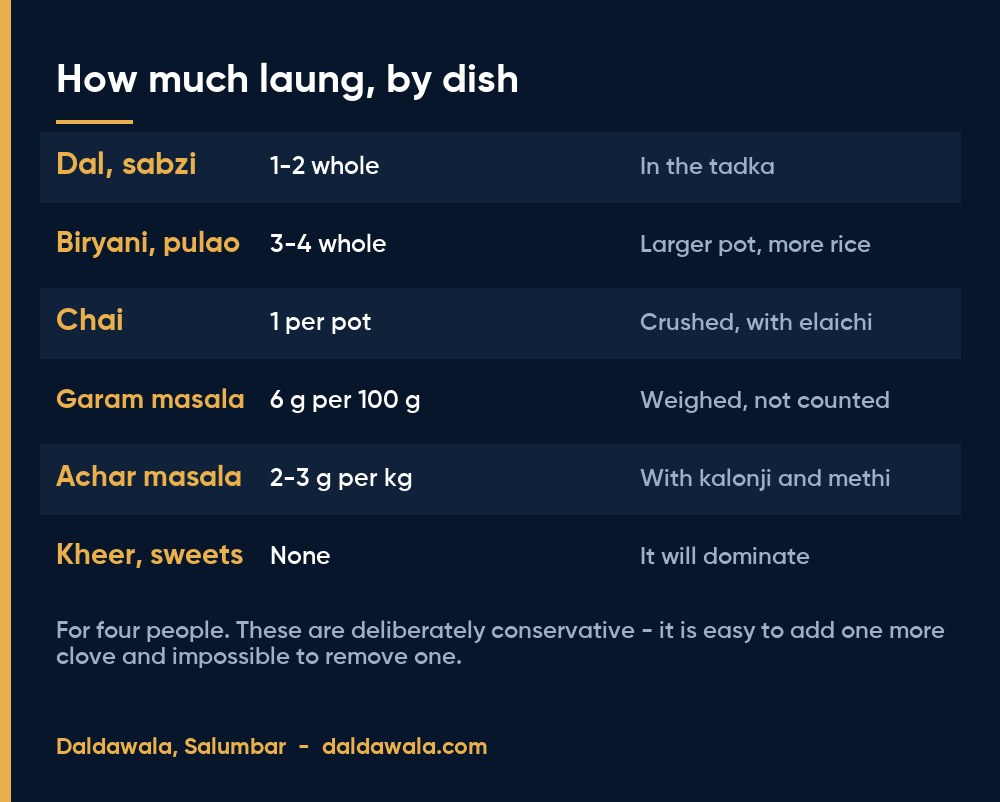
Whole, in the tadka at the start, for dal and sabzi - one or two, left in or fished out. Whole in a biryani or pulao, where the larger volume carries it. Crushed into chai alongside elaichi, one per pot. Ground into garam masala, where six grams per hundred is the proportion that works.
Where it does not belong is in sweets, where the eugenol fights the sugar, and in anything delicate. A clove in a kheer tastes like a mistake, because it is.
The toothache question
Pressing a clove against an aching tooth is one of the oldest home remedies in India, and unusually for such remedies, there is a clear mechanism: eugenol is a genuine local anaesthetic and mild antiseptic. Dentists have used eugenol preparations for well over a century, and clove oil is still a component of some temporary dental cements.
So it works, in the sense that it numbs. What it does not do is treat whatever is causing the pain. A tooth that hurts enough to need numbing needs a dentist, and clove is a way to get through the night until you see one.
Clove oil undiluted on the gum can irritate and burn the soft tissue, which is worth knowing - a whole clove held against the tooth, or oil diluted in a carrier, is gentler and does the same job.
Buying it
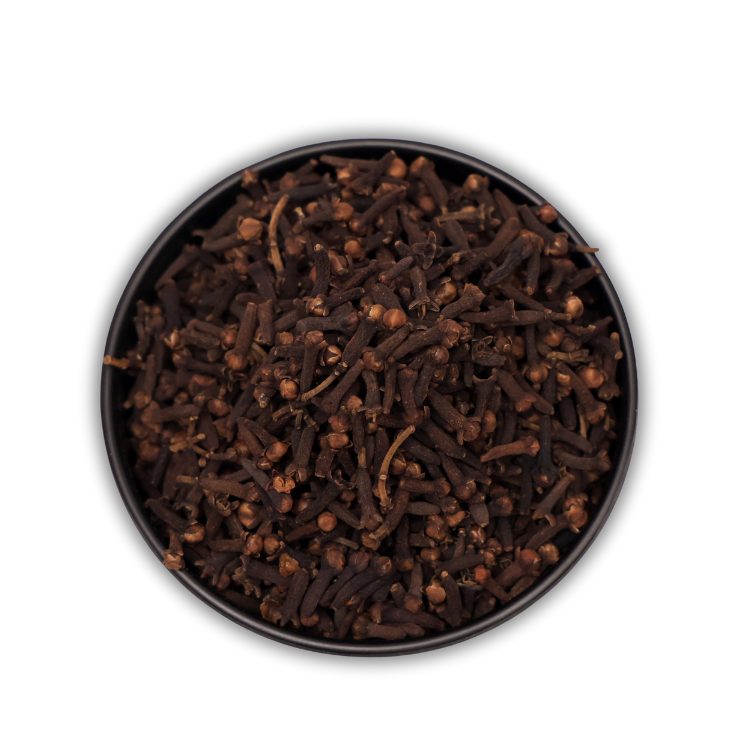
A good clove is plump at the head, with the round unopened bud clearly intact, and dark brown rather than black or pale. The stem should be unbroken.
The classic test: drop one in a glass of water. A good clove sinks, or floats vertically with the bud end up. A clove that floats horizontally has lost its oil and is a spent husk - these turn up in cheaper lots, often because the oil has been extracted commercially and the leftover buds sold on.
Press one with a fingernail. It should leave a faint oily mark and smell immediately. A clove that smells of nothing has nothing left in it.
Keep them whole, airtight, away from heat. Whole cloves keep two years; ground clove is noticeably flat in two months, and there is almost no reason to buy it ground.
Buying it in Salumbar
Our spices is on this site with the weight and the price on every pack. Order before 5 PM and it reaches you the same day inside Salumbar, free over ₹200. We have been on Sadar Bazar since 1961. If you would rather just say what you want, send it on WhatsApp and we will confirm the price before we pack anything.
Questions people ask
How many cloves should I put in a dish?
One or two for a dal or sabzi serving four; three or four in a biryani. Clove is the most assertive whole spice there is and excess cannot be corrected.
Does clove help toothache?
It numbs, genuinely - eugenol is a local anaesthetic that dentists have used for over a century. It does not treat the cause, so it is a way to get to the morning, not a substitute for a dentist.
How can I tell if cloves are good?
Drop one in water. A good clove sinks or floats bud-up; a spent one floats on its side. Pressed with a nail it should leave an oily mark and smell at once.
Should I buy cloves whole or ground?
Whole. They keep two years; ground clove is flat within a couple of months and there is no preparation that needs it pre-ground.
Can I eat raw cloves?
Chewing one is a common habit for breath and for a sore throat and is harmless in that quantity. Several at once is unpleasant and the eugenol can irritate the mouth.
Is clove good in sweets?
Generally no. The eugenol fights sugar and dominates delicate flavours. Cinnamon and cardamom are the warm spices for sweet dishes.



 (1).jpg)