Follow an Italian recipe with tej patta, or an Indian one with Mediterranean bay, and the dish will not be wrong exactly - it will be subtly off in a way that is hard to name.
They look similar enough to be sold interchangeably, and the vein pattern settles it in a second.
Short answer: Tej patta has three long veins running the length of the leaf and tastes faintly of cinnamon. Mediterranean bay has one central vein with side veins branching off, and tastes resinous and eucalyptus-like. They are not substitutes.
The vein test
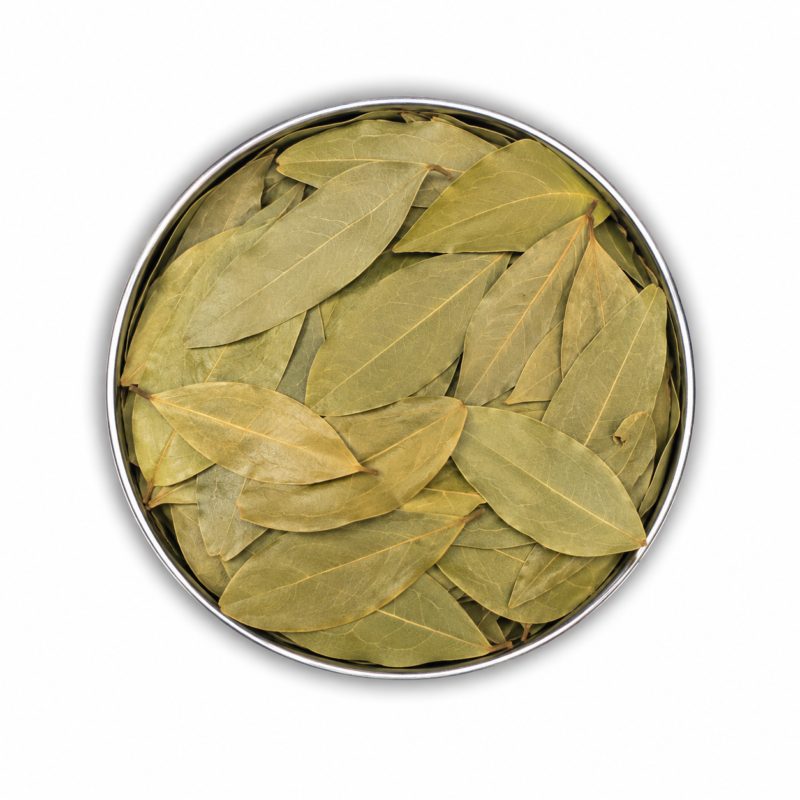
Hold the leaf up. Indian tej patta has three distinct veins running from the stem all the way to the tip, roughly parallel. Mediterranean bay has one thick central vein with smaller veins branching off it at an angle, like a feather.
That is the whole test and it never fails. The shape is a secondary cue - tej patta tends to be longer and narrower, bay shorter and broader - but shape varies within a lot and the veins do not.

What each one does
Tej patta comes from a cassia tree, the same family as the cinnamon bark most Indian kitchens use. It tastes faintly of cinnamon and clove - warm, sweetish, mild. It belongs in biryani, pulao, dal, rajma, and in most garam masala blends.
Mediterranean bay is laurel, and the taste is quite different: resinous, slightly medicinal, with a eucalyptus note. It belongs in a slow-cooked stew, a stock, a tomato sauce, a bean dish.
Put laurel in a biryani and it reads as faintly soapy against the other spices. Put tej patta in a Mediterranean stew and it is simply absent.
How to use it, and why it is often wasted
Tej patta needs fat and heat. The traditional method - a leaf dropped into hot oil or ghee at the very start, before the onions - is doing something specific: the aromatic compounds are fat-soluble, and the brief fry in oil extracts them in a way that simmering in water does not.
Which is why a leaf thrown into a pot of water with everything else contributes almost nothing. The most common way tej patta is wasted is by adding it late.
One or two leaves for a dish serving four. Remove before serving, or warn whoever gets it - the leaf itself stays tough and is not pleasant to chew.
Buying and keeping
Look for leaves that are a greenish-grey rather than brown, unbroken, and flexible rather than crumbling. A brown, brittle leaf has been sitting in the light for a long time and has lost most of its oil.
Snap one. It should smell faintly of cinnamon immediately. If you have to hold it to your nose and concentrate, it is spent.
Store flat in an airtight container, out of the light. They keep about a year with most of their aroma, and considerably longer as an ingredient that is merely present.
Buy small quantities. A hundred grams of tej patta is a startling number of leaves and will outlast its own usefulness in most kitchens.

Buying it in Salumbar
Our spices is on this site with the weight and the price on every pack. Order before 5 PM and it reaches you the same day inside Salumbar, free over ₹200. We have been on Sadar Bazar since 1961. If you would rather just say what you want, send it on WhatsApp and we will confirm the price before we pack anything.
Questions people ask
Is tej patta the same as bay leaf?
No. Tej patta is a cassia leaf with three lengthwise veins and a faint cinnamon taste. Mediterranean bay is laurel, with one central branching vein and a resinous eucalyptus taste.
Can I substitute bay leaf for tej patta?
Not well. The tastes are genuinely different, and in a biryani the laurel note reads as faintly soapy. If you must, use half as much.
How do I tell them apart?
Count the veins. Three running the length of the leaf means tej patta; one central vein with branches means bay.
When should tej patta go into a dish?
At the very start, in hot oil or ghee, before the onions. The aromatics are fat-soluble, so a leaf added to simmering water contributes almost nothing.
Should tej patta be removed before serving?
Yes, or warn whoever finds it. The leaf stays tough and is unpleasant to chew, though it is not harmful.
How long does tej patta keep?
About a year with most of its aroma, stored flat and airtight out of the light. Brown, brittle leaves have already lost it.


 (1).jpg)