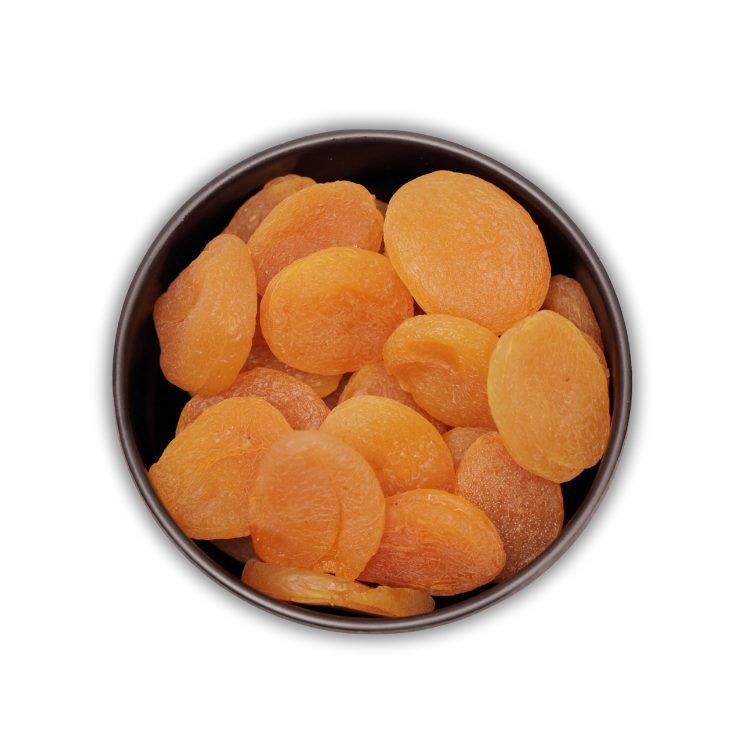
Two jars of dried apricot, one a vivid orange and one almost black-brown, at noticeably different prices. People assume the dark ones are old or the bright ones are dyed. Neither is right.
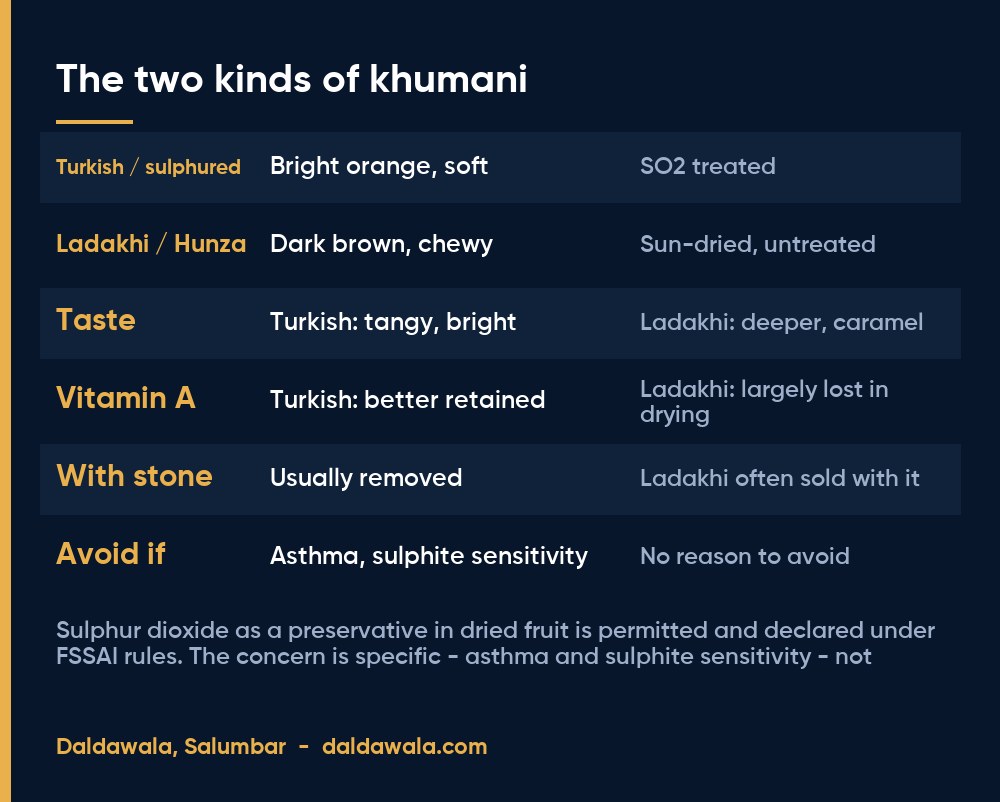
Short answer: Bright orange dried apricots have been treated with sulphur dioxide, which preserves the colour and the vitamin A. Dark brown ones are sun-dried without it. Both are fine; the sulphured ones are a genuine problem only for people with sulphite sensitivity or asthma.
What sulphur dioxide is actually doing
Fresh apricots turn brown when dried, for the same reason a cut apple does - enzymes reacting with oxygen. Sulphur dioxide stops that reaction.
The result is a dried fruit that stays orange, stays soft, keeps longer, and retains considerably more of its beta-carotene, which is what browns away in untreated drying.
It is a permitted preservative under FSSAI rules and under equivalent rules in Europe and elsewhere, and it has to be declared on the label. It is not an adulterant and it is not a dye.
Who should avoid it
Sulphites can trigger reactions in a minority of people, and the group that matters most is people with asthma - estimates suggest somewhere around 3 to 10% of asthmatics are sulphite-sensitive, and in that group the reaction can be a genuine bronchospasm rather than a mild upset.
For everybody else, dried fruit is not a major sulphite source and there is no particular reason for concern.
If you or a child in the house has asthma, buy the untreated brown ones. It is a straightforward swap and costs nothing except the colour.
How they taste, which is the real difference
Turkish sulphured apricots are tangy, bright, quite sharp, and soft enough to eat straight from the packet. They are the ones that go into a cake or a salad, and the ones children prefer.
Ladakhi and Hunza apricots - dried in the sun without treatment - taste completely different: deeper, more caramel, almost like a date, with a chewy, leathery texture. They are better for soaking, and they are what goes into a halwa or a compote.
Many Ladakhi apricots are sold with the stone still in. Inside that stone is a kernel that is eaten locally and is also where the bitter-apricot-kernel claims come from. Those kernels contain amygdalin, which releases cyanide, and the sweet and bitter varieties differ enormously in how much. Eating a few sweet kernels is traditional; eating bitter kernels as a cancer treatment is a documented cause of poisoning. That is a line worth drawing clearly.
Buying and keeping
For sulphured apricots, look for a consistent orange that is not fluorescent, and fruit that is soft and pliable rather than hard at the edges. An apricot that has gone hard has either been over-dried or sat too long.
For untreated ones, dark brown is correct and expected. What you are checking is that they are not dusty, not rock-hard, and smell sweet rather than fermented.
Both need an airtight container and, in a Salumbar summer, the fridge. They are moist and sugary, which is an invitation to insects, and four months at room temperature in the hot season is optimistic.
Rinse before eating, as with all dried fruit - it is air-dried and handled a good deal.
Buying it in Salumbar
Our dry fruits is on this site with the weight and the price on every pack. Order before 5 PM and it reaches you the same day inside Salumbar, free over ₹200. We have been on Sadar Bazar since 1961. If you would rather just say what you want, send it on WhatsApp and we will confirm the price before we pack anything.
Questions people ask
Why are some dried apricots bright orange?
They have been treated with sulphur dioxide, which stops the browning reaction and preserves the colour and vitamin A. It is a permitted, declared preservative, not a dye.
Are sulphured apricots bad for you?
For most people, no. Sulphites can trigger reactions in some asthmatics, so if asthma is in the house, buy the untreated brown ones.
Which apricot is healthier?
Sulphured ones retain more beta-carotene. Untreated ones have no sulphites. Both are fine, and the difference matters mainly for sulphite-sensitive people.
What is the difference in taste?
Turkish sulphured are tangy, bright and soft. Ladakhi untreated are deeper, caramel-like and chewy - closer to a date in character.
Can I eat apricot kernels?
A few sweet kernels is a traditional practice. Bitter kernels contain much more amygdalin, which releases cyanide, and eating them in quantity has caused documented poisonings. Do not take them as a remedy.
How should dried apricots be stored?
Airtight, and in the fridge through summer. They are moist and sugary and attract insects on a warm shelf.



 (1).jpg)