People look at the chilgoza price, assume a mistake, and ask again. It is not a mistake, and the reason is worth knowing because it also tells you how to buy it.
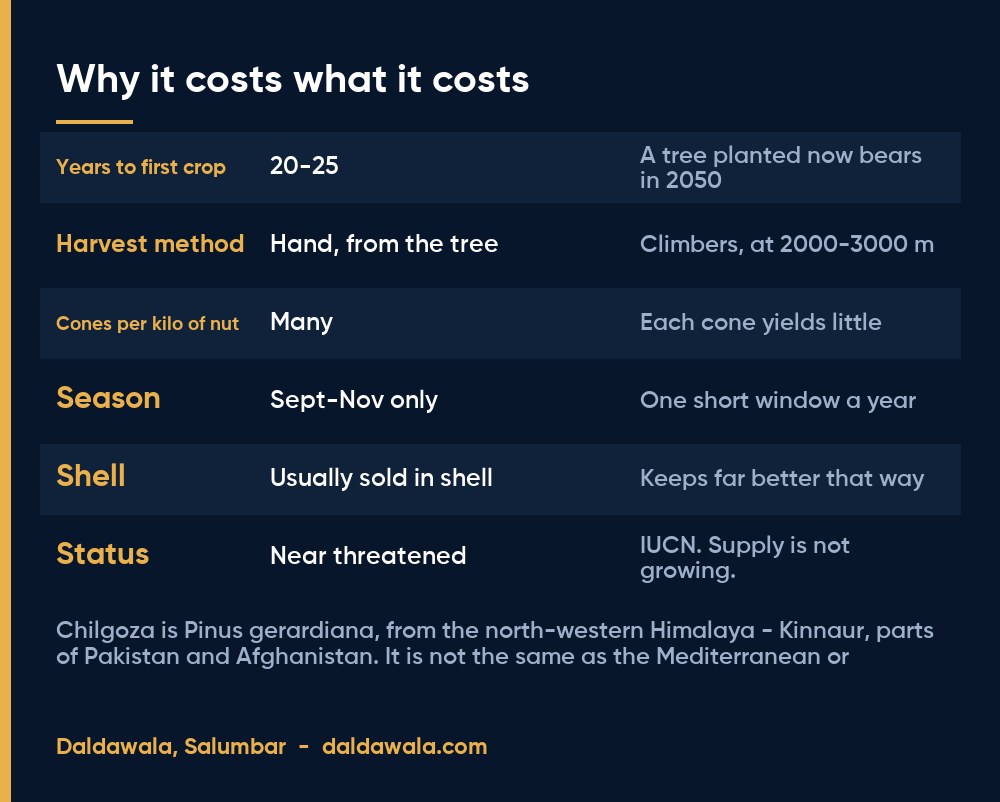
Short answer: Chilgoza comes from the Himalayan chilgoza pine, which takes 20 to 25 years to bear and is harvested by climbers picking cones by hand at high altitude. That is the entire explanation for the price.
A tree that takes a generation
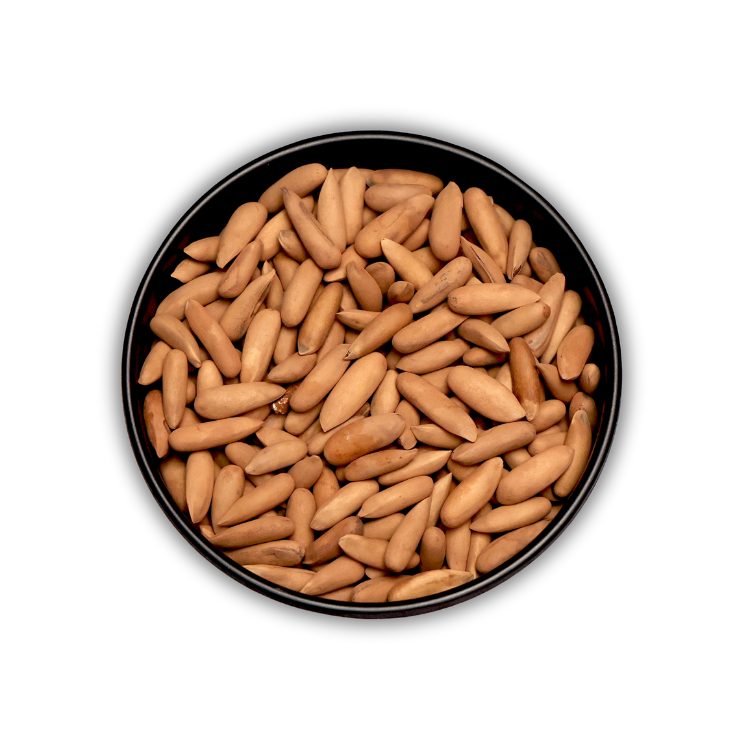
Pinus gerardiana, the chilgoza pine, grows on dry rocky slopes in the north-western Himalaya at two to three thousand metres. It takes twenty to twenty-five years before a tree produces a usable crop.
There is no way to shorten that and no way to farm it intensively. Every chilgoza sold this year came from a tree planted in the early 2000s at the latest, in terrain where little else grows.
The species is listed as near threatened, partly because of harvesting pressure and partly because the forests it grows in are also used for fuel. Supply is not going to increase.
Harvested by hand, on a cliff
The cones are picked by climbers, by hand, from trees on steep slopes, during a short autumn window. The cones are then heated or dried to release the seeds, which are extracted individually.
Each cone gives a modest number of nuts. The labour per kilo is extraordinary compared to an almond orchard where a machine shakes the tree.
For the communities in Kinnaur and the surrounding districts, the chilgoza harvest is a significant part of the annual income, which is one reason the price has held up rather than being competed away.
Buying it sensibly
Buy in shell. Chilgoza kernels are soft and oily and go rancid quickly - a few months at room temperature. In shell they keep six months or more, and shelling is easy enough with fingers or a light press.
Buy small. A hundred grams is a real amount of chilgoza and a sensible purchase. There is no reason to buy a kilo of the most perishable expensive nut in the shop.
Buy in season. October to December is when the new crop reaches shops. A chilgoza bought in March is from last autumn and has been stored for six months.
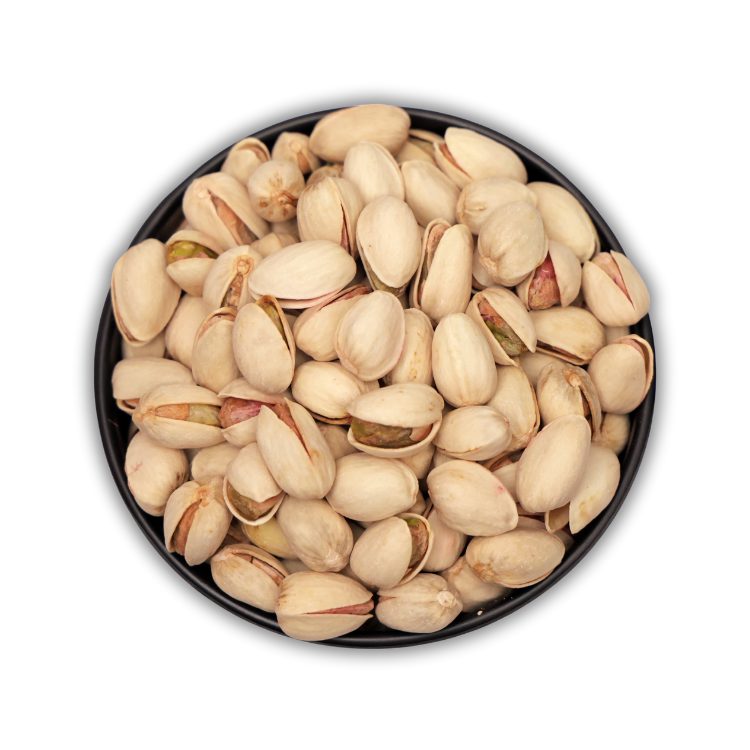
Check it is chilgoza. Himalayan chilgoza is long and thin - almost cylindrical, 15 to 20 mm. Chinese pine nuts are shorter, fatter and rounder, and cost considerably less. Both are pine nuts and only one is chilgoza.
What to do with it
Eat it plain. That sounds like a non-answer and it is the right one - chilgoza is sweet, soft, resinous and distinctive, and anything you cook it into will cost a great deal and taste mostly of the other things.
Traditionally in the hills it is eaten raw or lightly roasted through the winter, and a small handful is a meaningful amount of energy, which is what it was for.
If you must cook with pine nuts - a pesto, a pulao - buy Chinese pine nuts, which are a third of the price and are what most recipes outside the Himalaya actually mean.
Buying it in Salumbar
Our imported nuts is on this site with the weight and the price on every pack. Order before 5 PM and it reaches you the same day inside Salumbar, free over ₹200. We have been on Sadar Bazar since 1961. If you would rather just say what you want, send it on WhatsApp and we will confirm the price before we pack anything.
Questions people ask
Why is chilgoza so expensive?
The tree takes 20 to 25 years to bear, grows only on high rocky Himalayan slopes, and is harvested by hand by climbers in a short autumn window. The labour per kilo is enormous.
Is chilgoza the same as pine nuts?
It is one kind of pine nut - Pinus gerardiana, from the north-western Himalaya. Chinese and Mediterranean pine nuts are different species, shorter and rounder, and far cheaper.
Should I buy chilgoza in shell or shelled?
In shell. The kernels are soft and oily and go rancid within a few months; the shell roughly doubles that.
When is chilgoza in season?
The harvest is September to November, and new-crop nuts reach shops from October. Buying in autumn gets you the freshest.
How much chilgoza should I eat?
A small handful. It is very energy-dense and very expensive; both argue for the same portion.
How do I know it is real chilgoza?
Shape. Himalayan chilgoza is long and thin, almost cylindrical, 15 to 20 mm. Short, fat, round pine nuts are a different and cheaper species.



 (1).jpg)