Salumbar sees 44 degrees in May. Spices that would keep two years in a cool cupboard lose most of what makes them worth buying in a few months on a hot shelf - and because the loss is gradual, almost nobody notices it happening.
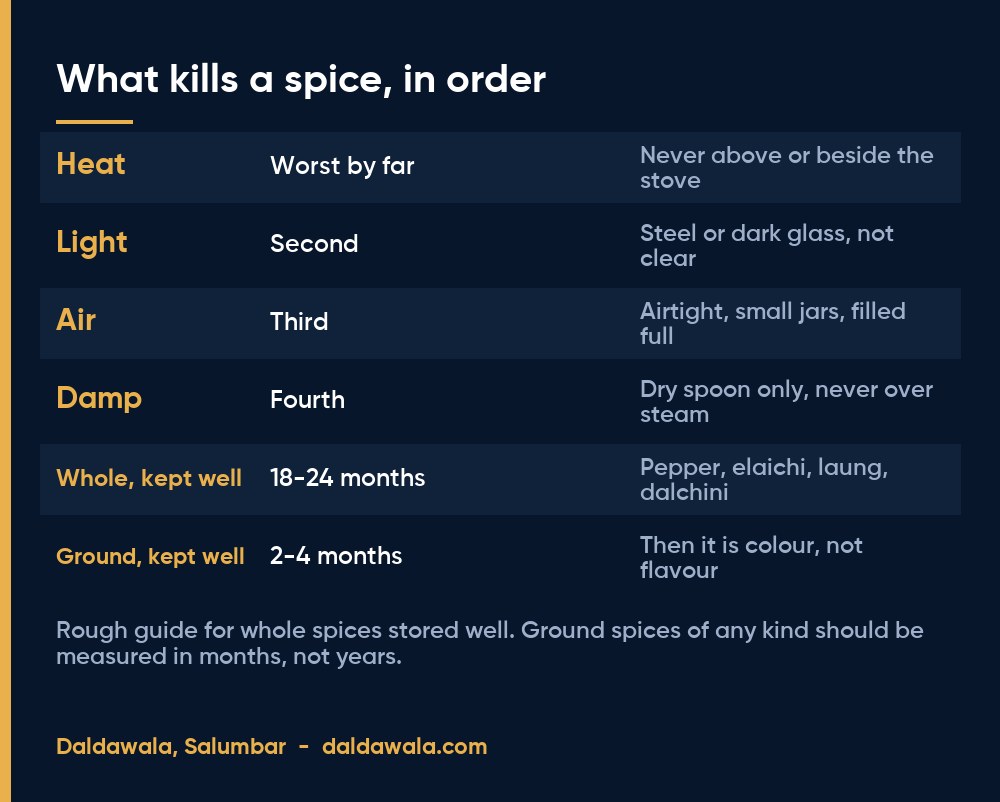
Short answer: Heat is the enemy, then light, then air, then damp. A masala dabba sitting above the stove is losing aroma every time you cook. Moving it is the single biggest improvement most kitchens can make.
Heat is the whole problem
The aroma in a spice sits in volatile oils, and volatility is a function of temperature. Every degree warmer, those oils leave faster. A jar at 40 degrees loses aroma several times faster than the same jar at 25.
Which makes the almost universal Indian kitchen arrangement - masala dabba on the shelf directly above the hob, in easy reach - the worst possible place for it. Convenient, and expensive.
The fix costs nothing. Move the dabba to a cupboard on the far side of the kitchen, or into the lowest, coolest shelf you have. Bring it out when you cook and put it back. That one change does more for the taste of your food than any upgrade in what you buy.
Light, and why steel beats glass
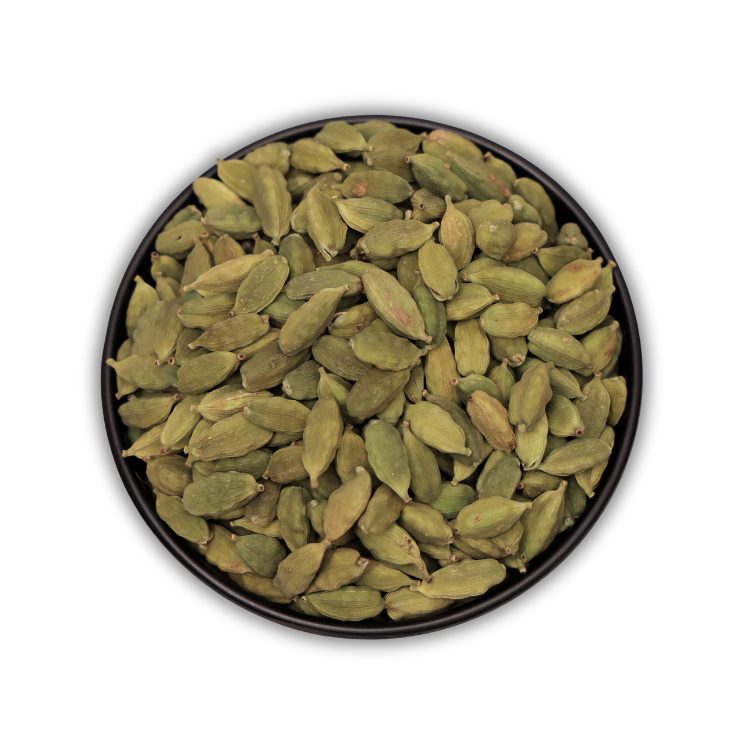
Ultraviolet light breaks down the compounds that give spices their colour and aroma. It is why haldi fades from deep orange to pale yellow on a sunny shelf, and why green elaichi turns grey.
Steel containers solve this completely and are what most Indian kitchens already use. If you prefer glass - and glass is better for seeing what you have - keep it in a closed cupboard rather than on an open shelf. Clear glass on a windowsill is the worst of both worlds.
Air, and the half-empty jar problem
A jar that is one-fifth full is four-fifths air, and that air is slowly oxidising what is left. The practical consequence is that the last of a large packet is always worse than the first - not because it is older in days, but because it has spent longer in a mostly empty container.
So: buy whole spices in quantities you will use in a year, and ground spices in quantities you will use in two months. When a jar is running low, move the contents to a smaller one. It feels fussy and it measurably works.
Damp, and the spoon
A wet spoon in a masala dabba introduces moisture that will not leave. Within weeks the powder cakes, and shortly after that it grows mould that you may not see until it is well established.
Never hold the dabba over a steaming pot to tip something in, and never use the spoon you have just stirred the sabzi with. Both are habits rather than decisions, which is why they are worth naming.
If a spice has caked, it has taken on water. Spreading it in the sun will dry it but will not restore the aroma, and if there is any sign of mould the whole jar goes. There is no saving it.
The practical routine
Buy whole, in sensible quantities. Keep whole spices in airtight steel or dark glass in the coolest cupboard you have. Grind two months' worth of the powders you use often, keep that in a small jar in the masala dabba, and refill from the whole stock.
Through the worst of the summer, the fridge is a reasonable home for the expensive things - elaichi, kesar, javitri - as long as they are genuinely airtight, because a cold jar opened in a hot kitchen pulls in condensation.
Buying it in Salumbar
Our spices is on this site with the weight and the price on every pack. Order before 5 PM and it reaches you the same day inside Salumbar, free over ₹200. We have been on Sadar Bazar since 1961. If you would rather just say what you want, send it on WhatsApp and we will confirm the price before we pack anything.
Questions people ask
Where should the masala dabba be kept?
Anywhere except above or beside the stove. The coolest cupboard in the kitchen is the correct answer, even if it means a few extra steps while cooking.
How long do whole spices last?
Eighteen months to two years kept cool, dark and airtight. Ground spices are a different matter - two to four months before they are mostly colour.
Should spices go in the fridge?
The expensive aromatic ones can, through peak summer, if the container is genuinely airtight. A loosely sealed jar will collect condensation every time it comes out.
Steel or glass containers?
Steel blocks light completely and is the safer default. Glass is fine in a closed cupboard and lets you see what you have. Clear glass in daylight is the one to avoid.
My haldi has caked - can I use it?
If it is just caked and smells normal, break it up and use it soon; the moisture is already in there. If there is any sign of mould, throw the whole jar away.
Does roasting spices make them keep longer?
No, the opposite. Roasting opens up the oils, which improves the taste now and shortens the life. Roast what you are about to grind, not what you are about to store.



 (1).jpg)