Magaj is one of those ingredients that is in a great deal of Indian food and that almost nobody buys deliberately. It is in the korma, in the thandai, in the winter ladoo, in the mithai - doing structural work, rarely getting named.
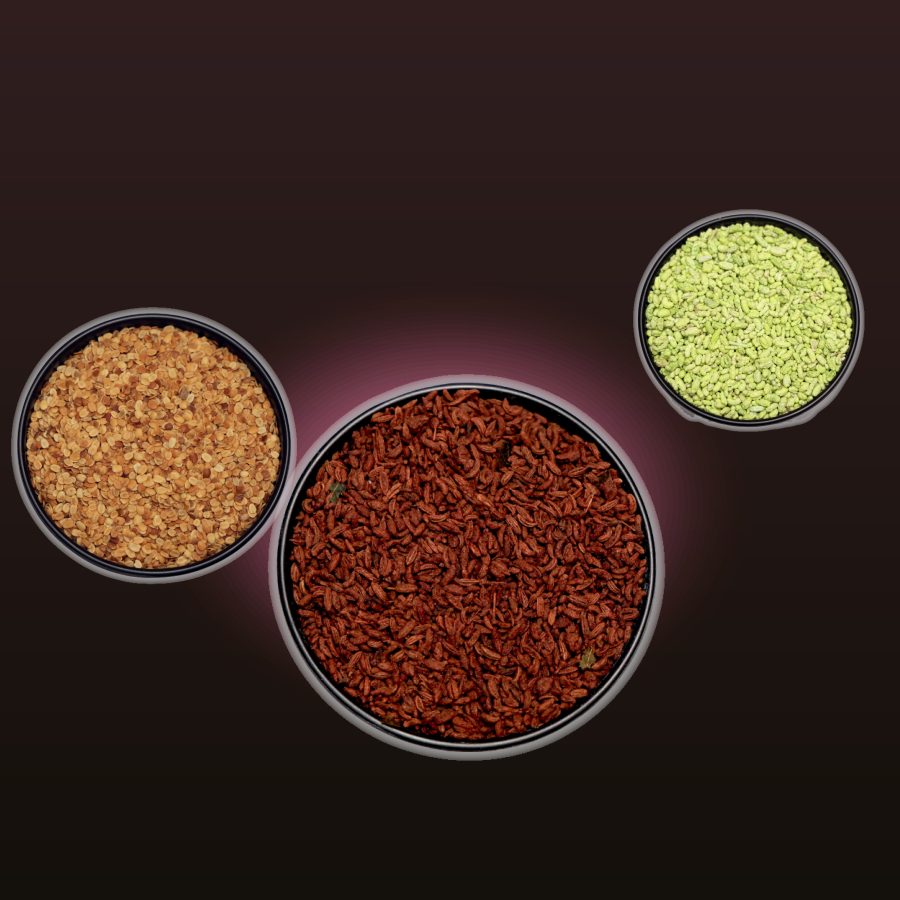
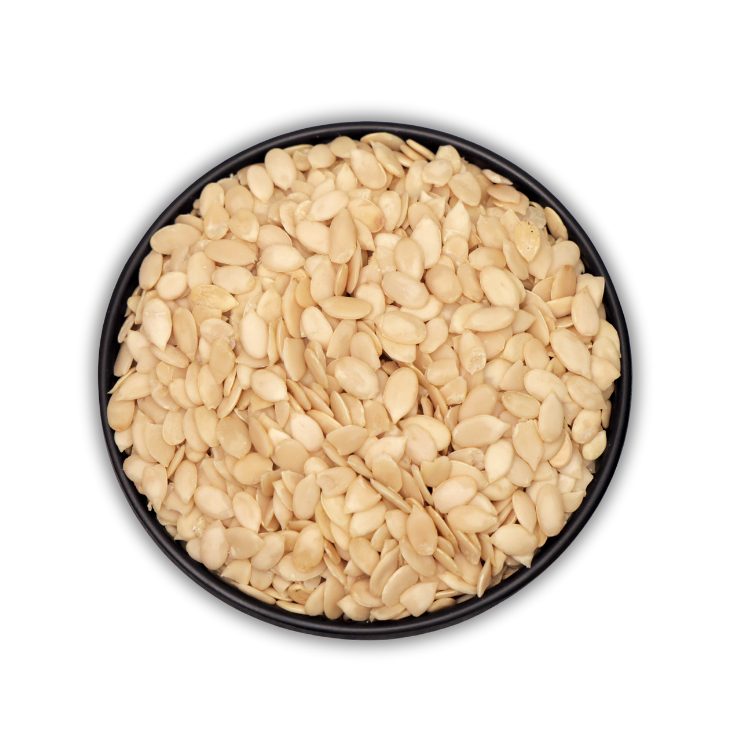
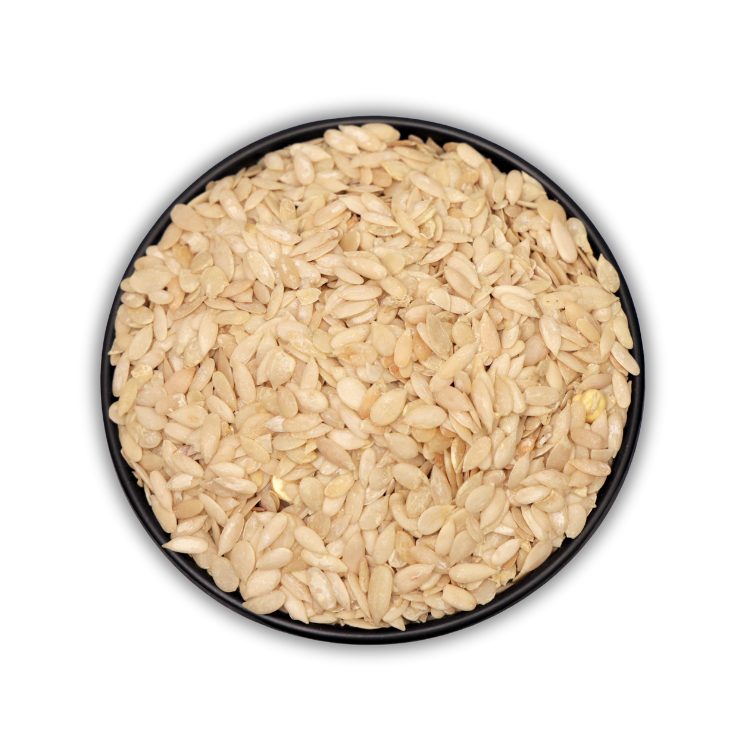
Short answer: Magaj are hulled melon seed kernels - watermelon or muskmelon. Ground, they thicken a gravy with body rather than starch, which is why Mughlai white gravies use them instead of flour.
Why a gravy wants magaj and not flour
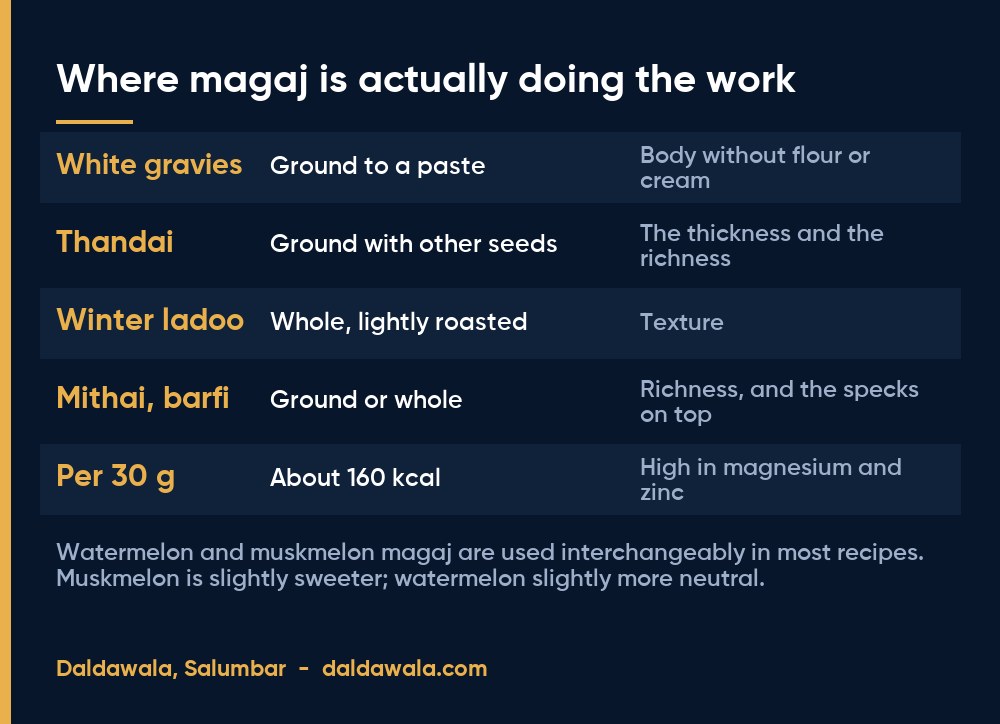
There are two ways to thicken a gravy. One is starch - besan, flour, a boiled potato - which thickens by absorbing water and gives a slightly gluey, flat result. The other is to grind something fatty and fibrous into a paste, which thickens by emulsion and gives body with flavour.
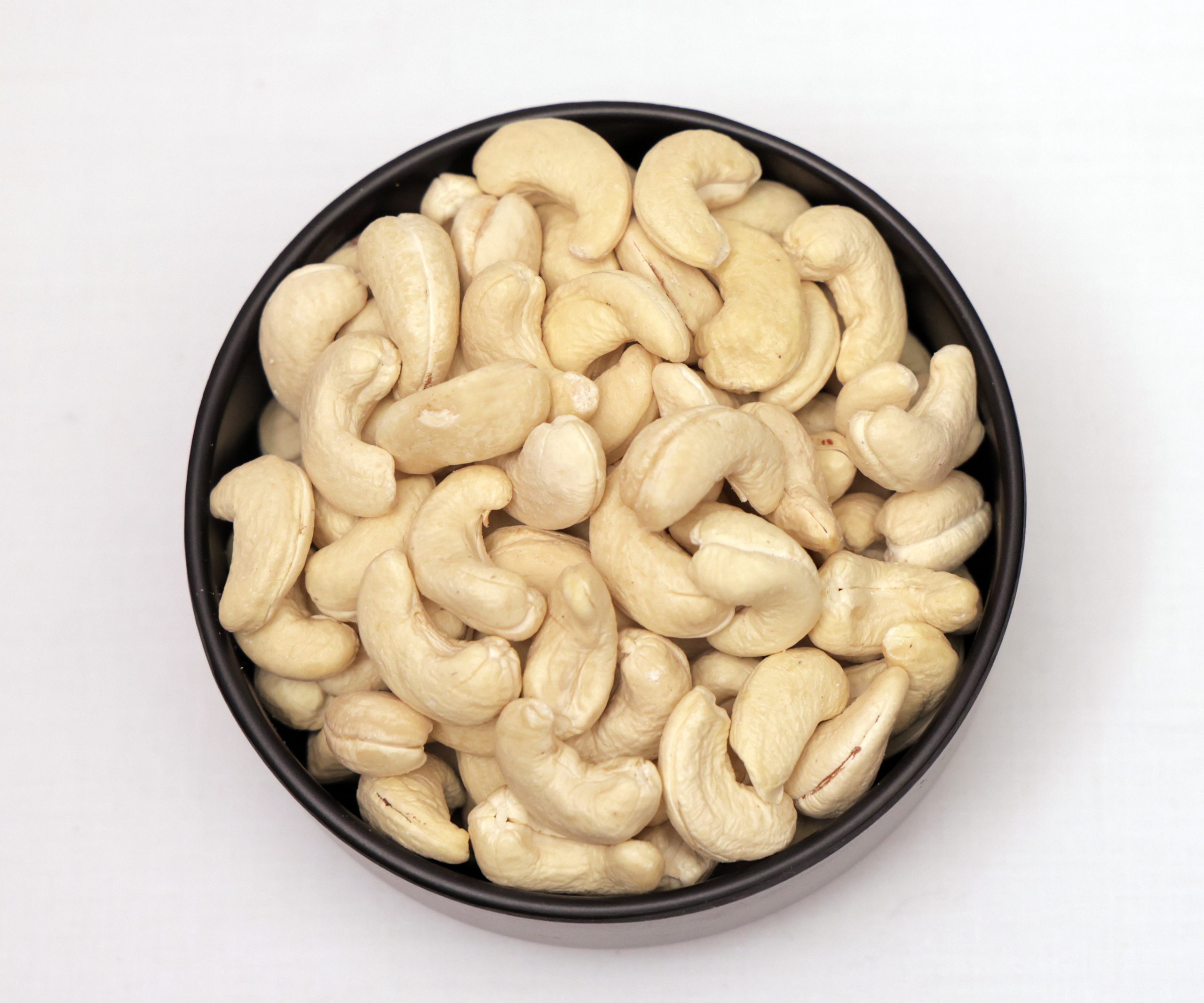
Magaj is the second kind, and it is why a good korma or a shahi paneer has a texture that cannot be reproduced with cornflour. Cashew does the same job and is richer and more expensive; magaj is lighter and more neutral, which is often what the dish wants.
Soak a handful in warm water for twenty minutes, grind to a smooth paste, and add it to the gravy towards the end. Added early it can split.
Watermelon or muskmelon
Both are sold as magaj and both are hulled kernels from a melon. Watermelon magaj is the more common and slightly more neutral; muskmelon (kharbuja) magaj is a touch sweeter and a little softer.
For gravies, either. For thandai and sweets, muskmelon is the traditional choice and does taste marginally better. For a winter ladoo, whichever is in the shop.
What matters more is that they are hulled - the white kernel, not the whole seed with the shell on. Unhulled seeds are a snack; magaj is the kernel.
They go rancid faster than you think
This is the thing worth knowing. Magaj are small, hulled, and about 50% fat - which means a very large surface area of exposed oil relative to their weight. They oxidise faster than almost anything else in a dry fruit shop.
A jar of magaj left on a warm shelf for six months will taste bitter and faintly of paint, and because they are usually ground into something, the bitterness turns up in a finished dish with no obvious source. It is a common and genuinely puzzling kitchen problem: "the korma tasted odd and I cannot think why".
So: buy small quantities, keep them in the fridge, and taste a few before using them in anything that matters. A fresh magaj is mild, faintly sweet and clean. If it is bitter, throw the jar.
The nutrition, briefly
Magaj carry a useful amount of magnesium, zinc and iron, and about 8 grams of protein per 30-gram handful. That is similar to pumpkin seeds and for the same reason - they are seeds doing the same job for the same kind of plant.
They are not eaten by the handful in Indian cooking, so the nutritional contribution from the way they are actually used is modest. If you want the minerals, eat pumpkin seeds; if you want a gravy with body, use magaj. Choosing magaj as a health food is doing it the hard way.
Buying it in Salumbar
Our seeds is on this site with the weight and the price on every pack. Order before 5 PM and it reaches you the same day inside Salumbar, free over ₹200. We have been on Sadar Bazar since 1961. If you would rather just say what you want, send it on WhatsApp and we will confirm the price before we pack anything.
Questions people ask
What is magaj beej?
Hulled melon seed kernels - watermelon or muskmelon. The white kernel, not the whole seed with the shell on.
What is magaj used for?
Ground into a paste to thicken white gravies, in thandai, in winter ladoo, and in mithai. It gives body without the gluey quality of a starch thickener.
Watermelon or muskmelon magaj?
Largely interchangeable. Muskmelon is slightly sweeter and traditional for thandai and sweets; watermelon is more neutral and common in gravies.
Why does my magaj taste bitter?
It has gone rancid. Magaj are hulled and about half fat, so they oxidise faster than most things. Keep them in the fridge and buy small quantities.
Can I use cashew instead of magaj?
Yes, in gravies, and it will be richer and more expensive. Magaj is lighter and more neutral, which many dishes prefer.
How should magaj be stored?
Airtight, in the fridge. At room temperature in a warm kitchen they are noticeably bitter within a few months.


 (1).jpg)