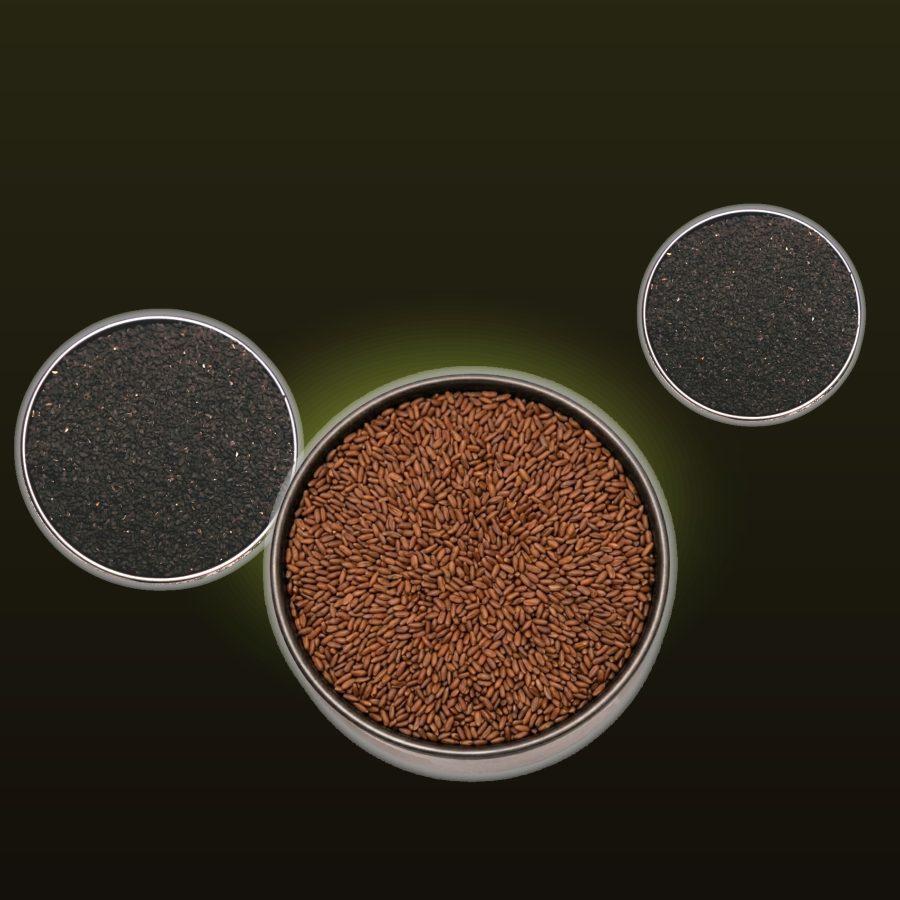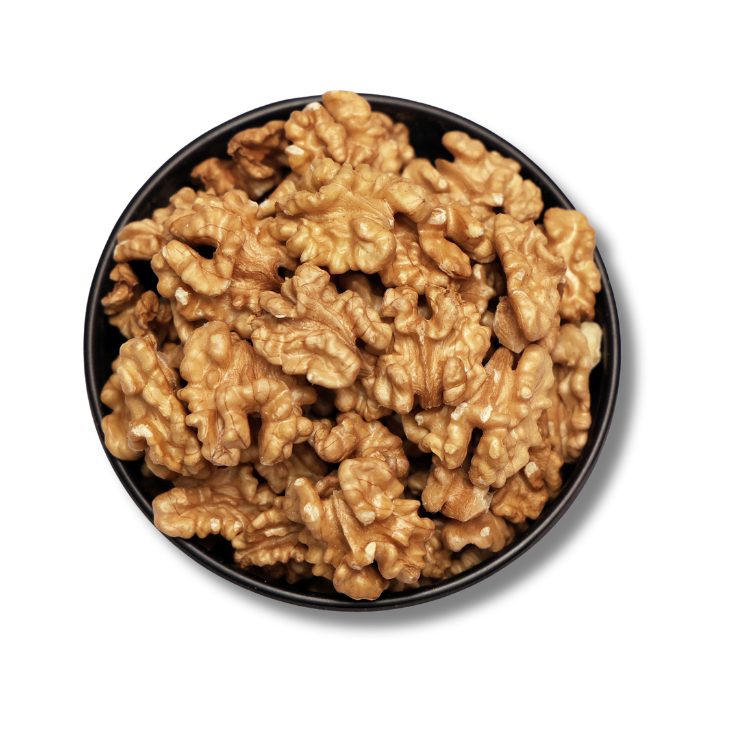
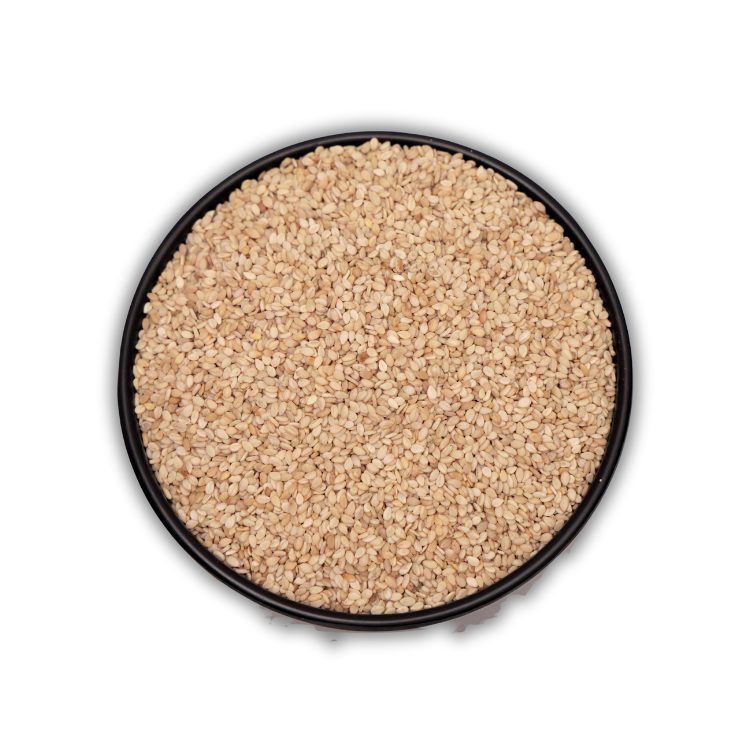
Both are sesame. The difference is whether the hull was removed, and that single decision changes the colour, the taste, the calcium content and what the seed is good for.
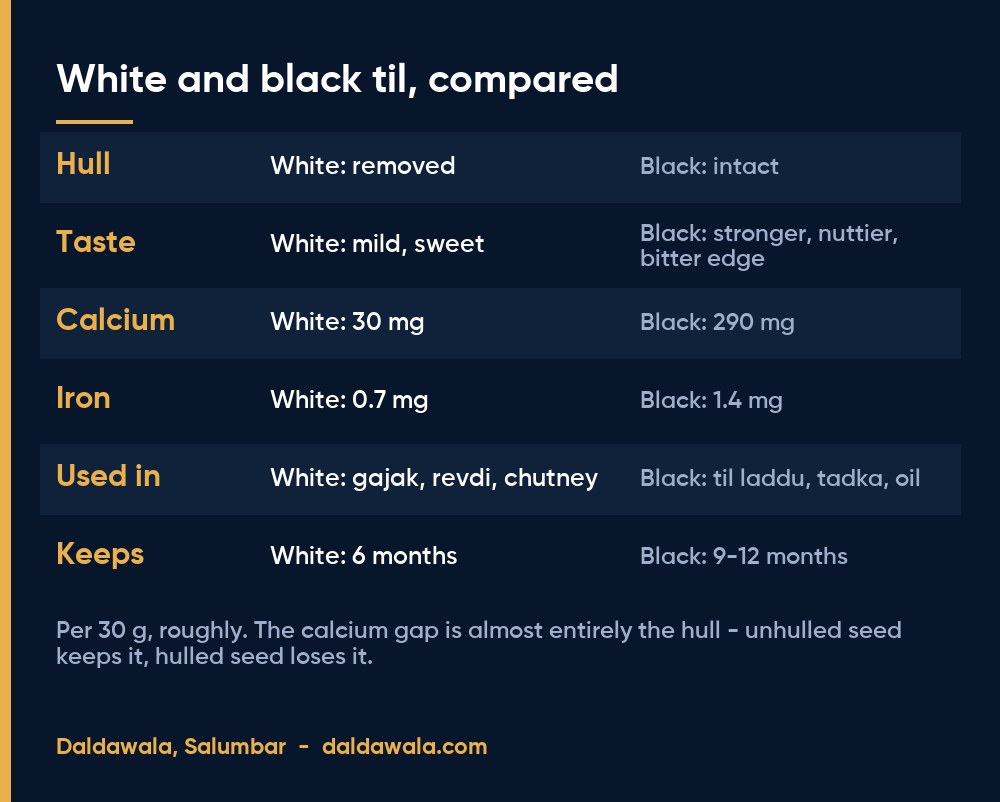
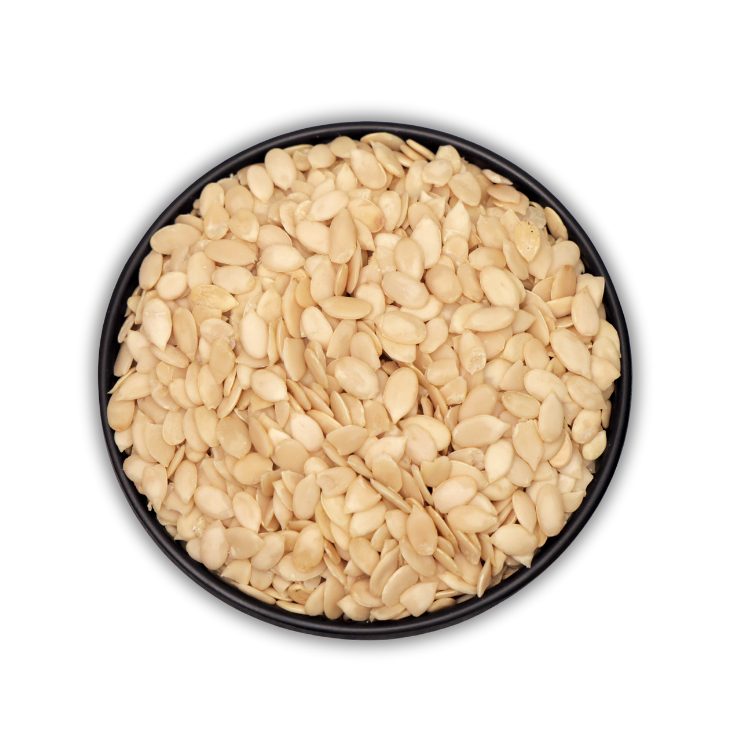
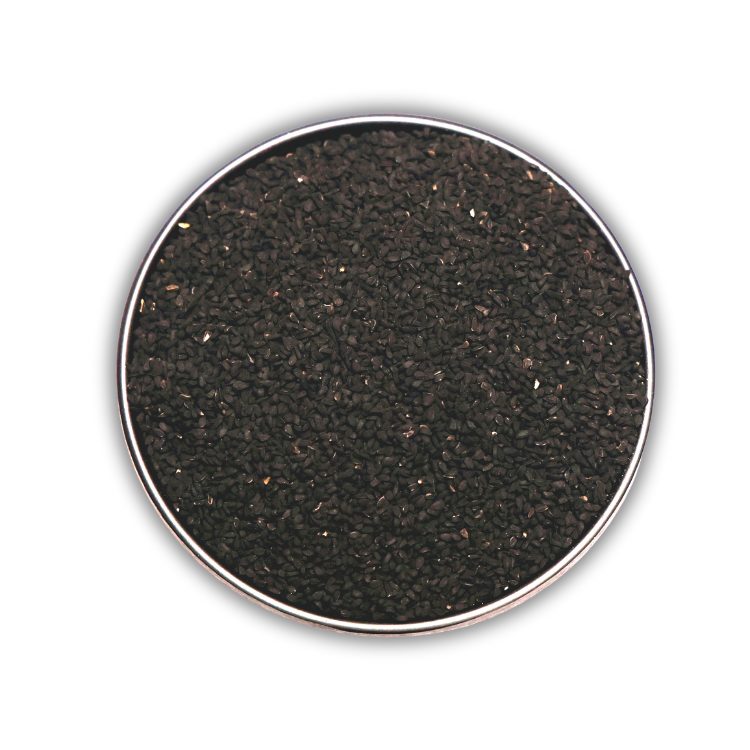
Short answer: Black til keeps its hull, which is where most of the calcium sits - about three times as much as hulled white til. White til is milder and better where the taste should not dominate.
The hull is where the calcium is
This is the one genuinely important difference. Sesame is famous as a plant source of calcium, and almost all of that calcium sits in the hull - the thin outer skin.
Hulled white til carries around 30 mg of calcium per 30 grams. Unhulled black til carries close to 290 mg for the same weight, which is roughly a third of an adult's daily requirement. That is not a small gap; it is a tenfold one.
So if calcium is the reason you are eating til - and for a lot of people avoiding dairy, it is - the black, unhulled seed is the one that does the job. White til is a pleasant seed that happens not to have much calcium in it.
The hull also carries oxalates, which bind some of that calcium and reduce how much is absorbed. The honest version is therefore: black til is a good calcium source, not a perfect one.
Which one for which dish
Gajak, revdi, chikki. White til. The sweet is about the gur and the crunch, and black til would make it visually odd and slightly bitter.
Til laddu for Makar Sankranti. Traditionally black or a mix. The stronger taste stands up to gur, and the seasonal association with warmth belongs to the black seed.
Chutney, especially South Indian. White, roasted. Mild enough to be a base rather than a flavour.
Tadka. Either, a quarter teaspoon. Black looks better against a pale sabzi.
Sprinkled on bread or paratha. White, because it toasts to a nicer colour.
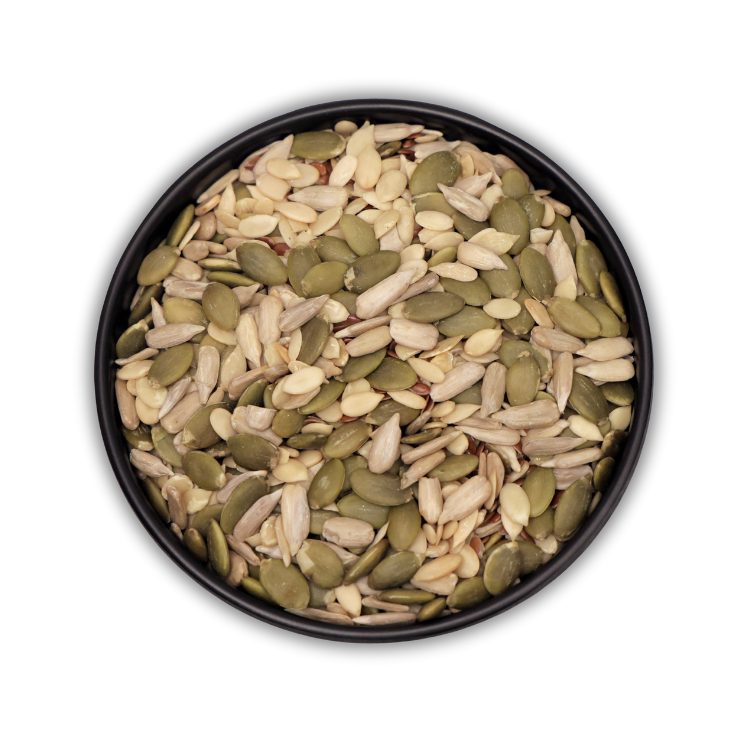
The roasting rule
Til burns faster than almost any seed in an Indian kitchen, and burnt sesame is sharply bitter in a way that cannot be rescued.
Dry pan, low flame, constant stirring, and you are listening rather than watching: the seeds start to pop and jump after about two minutes, and the moment they do, they are seconds from done. Pull the pan off at the first sign of colour.
With black til the colour cue is useless, so sound and smell are all you have. Count the pops - when they slow down, it is finished.
Let them cool in a separate plate, not in the hot pan, or the residual heat carries them past where you stopped.
Storage, and why til goes bad
Sesame is about 50% oil and that oil is prone to oxidising. Hulled white til has no skin to protect it and keeps around six months; unhulled black keeps nine to twelve.
Both keep considerably longer in the fridge, which is worth doing through a Rajasthani summer. Roasted til of either kind keeps about half as long as raw - roast what you need.
Rancid sesame tastes bitter and faintly soapy. Because til is usually one component of something else, that bitterness turns up in a finished dish with no obvious cause - the same problem as rancid magaj. Taste a few before using them in anything that matters.
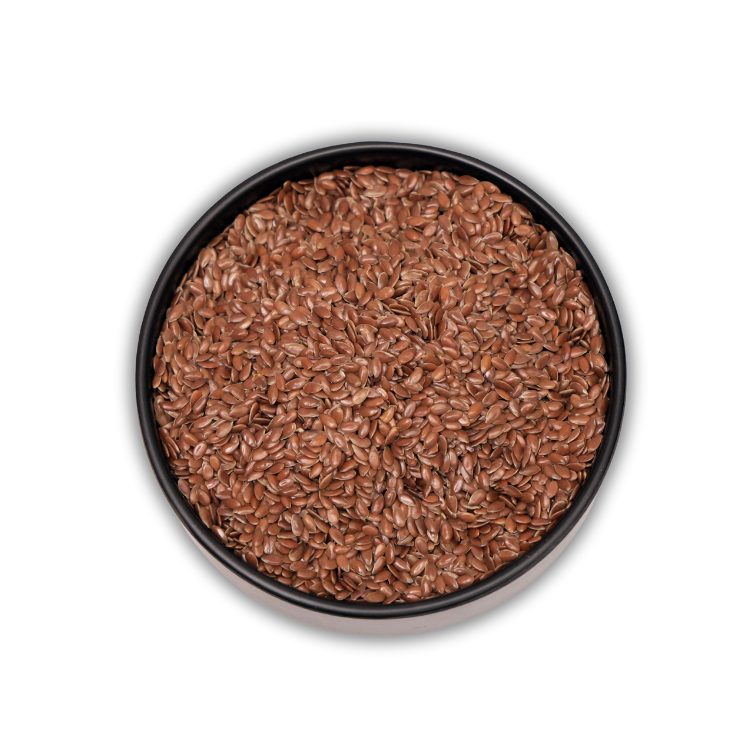
Buying it in Salumbar
Our seeds is on this site with the weight and the price on every pack. Order before 5 PM and it reaches you the same day inside Salumbar, free over ₹200. We have been on Sadar Bazar since 1961. If you would rather just say what you want, send it on WhatsApp and we will confirm the price before we pack anything.
Questions people ask
Is black til healthier than white?
For calcium, substantially - about ten times as much, because the hull is intact. For everything else, they are close.
Which til for til laddu?
Black or a mix, traditionally. The stronger taste stands up to gur. White works and makes a milder, paler ladoo.
Why did my sesame turn bitter?
Either it was burnt during roasting, or the seed has gone rancid. Til burns in seconds and about half of it is oil, so both are common.
Does sesame give enough calcium?
Unhulled black til carries about 290 mg per 30 g, roughly a third of a day's need. Oxalates in the hull reduce absorption somewhat, so treat it as a good contributor rather than a complete answer.
How do I roast til without burning it?
Dry pan, low flame, constant stirring. Listen for the popping - once it slows, take it off immediately and tip it onto a cold plate.
How long does til keep?
Hulled white about six months, unhulled black nine to twelve. Both keep much longer in the fridge, which is worth doing in summer.


 (1).jpg)