These two sit next to each other in every shop and get bought more or less interchangeably, which is a shame, because they are good at quite different things.
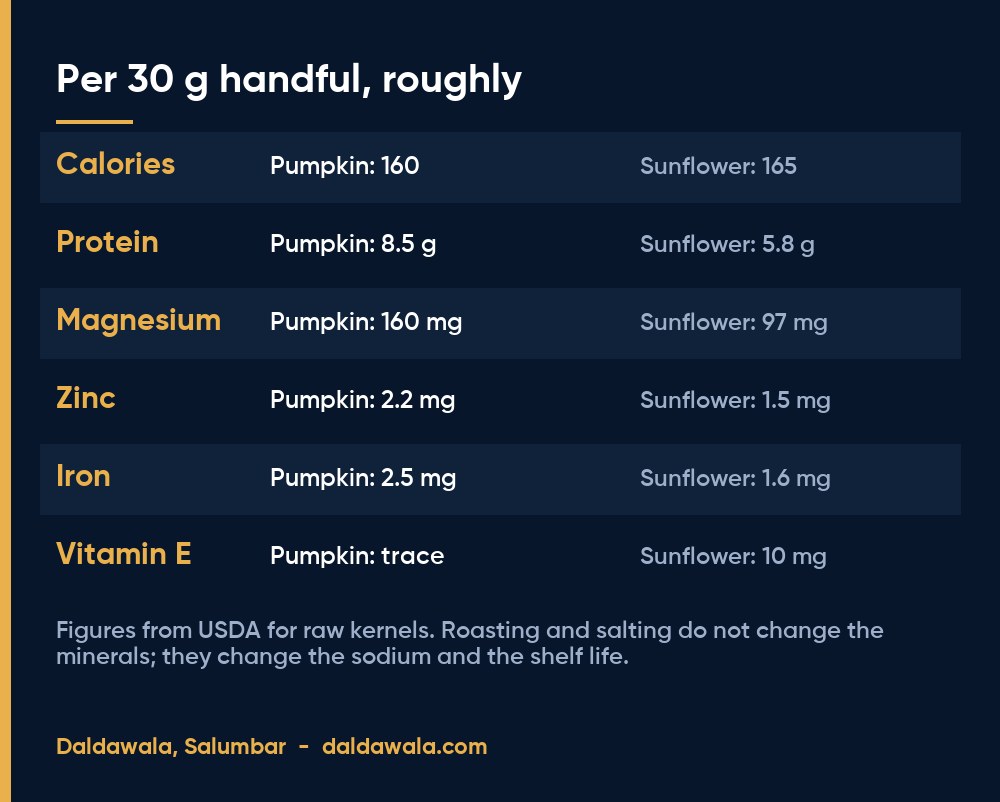
Short answer: Pumpkin seeds for zinc, magnesium and iron - a handful covers a third of a day's magnesium. Sunflower seeds for vitamin E and for cost. If you only keep one jar, keep pumpkin.
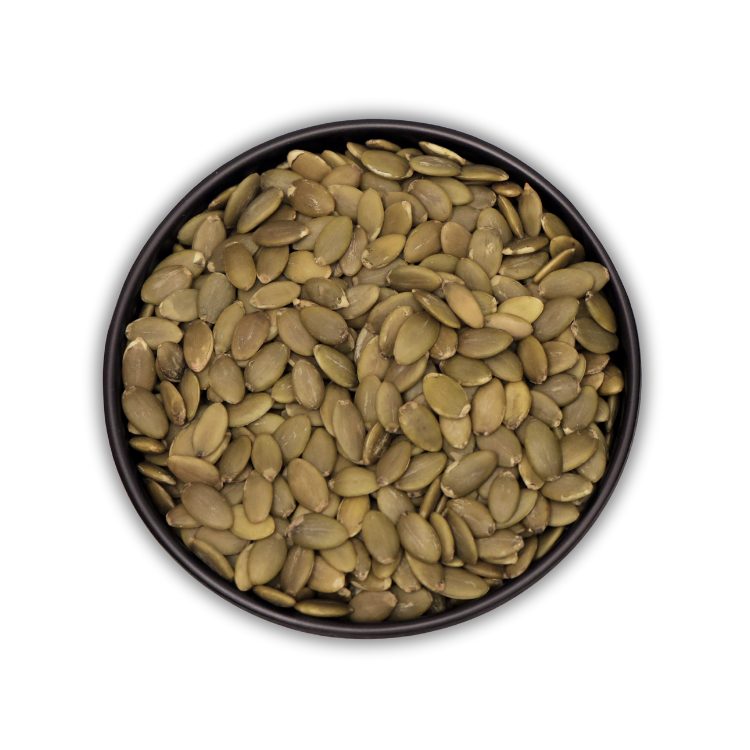
What pumpkin seeds are actually good at
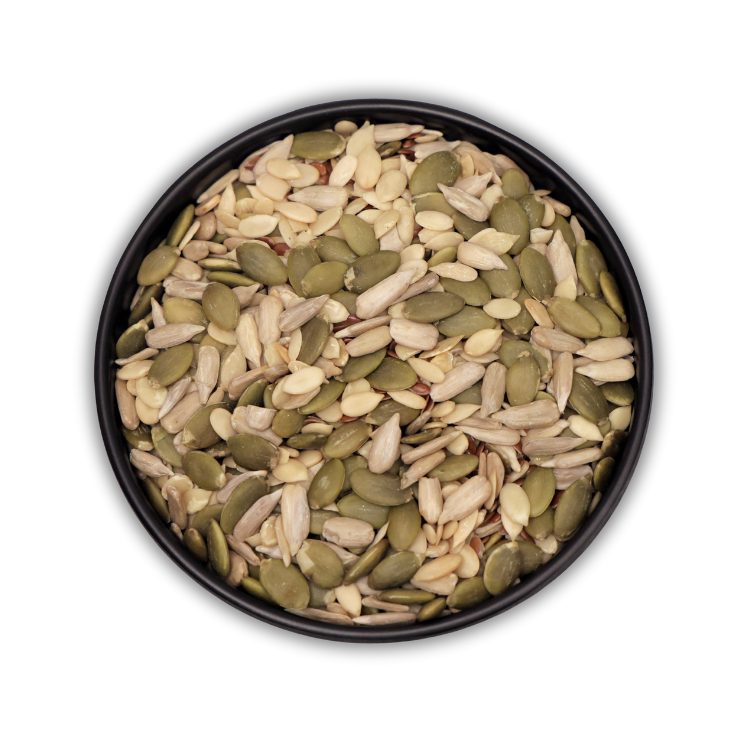
Magnesium, first. A 30-gram handful carries around 160 mg, which is roughly 40% of an adult's daily requirement, and magnesium is one of the minerals Indian diets most commonly run short on.
Then zinc and iron, both in useful amounts, and 8.5 grams of protein - which is genuinely high for a seed, higher per gram than most nuts.
What they are not is a cure for anything. The internet is full of specific claims about pumpkin seeds and prostate health; the evidence is thin and the sensible framing is that they are a dense, mineral-rich food, which is enough.
What sunflower seeds are for
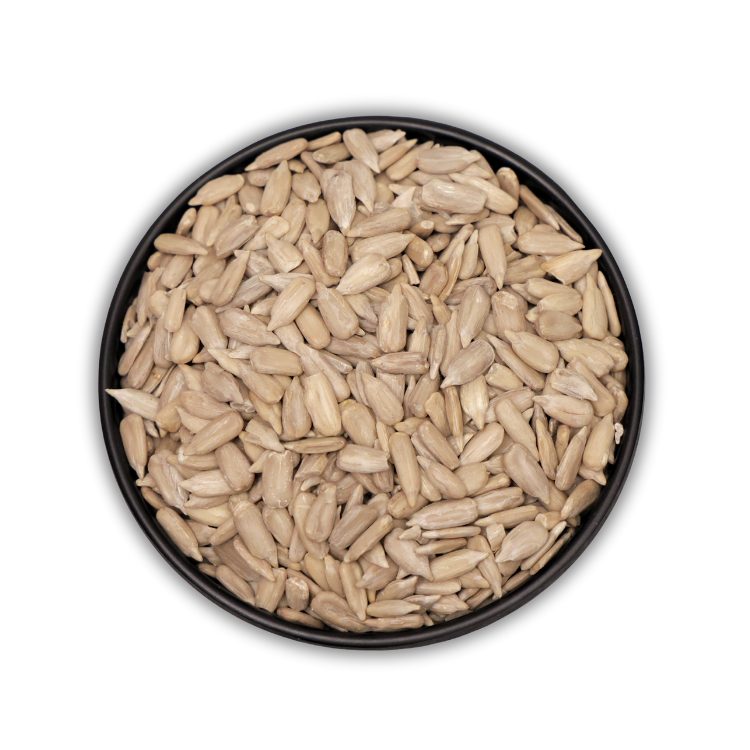
Vitamin E, overwhelmingly. A handful carries about 10 mg, which covers two-thirds of a day's need, and almost nothing else in an Indian kitchen does that as cheaply.
They are also noticeably cheaper per kilo than pumpkin seeds, milder in taste, and smaller - which makes them better for sprinkling over things, baking into bread and stirring into a chaat where larger seeds would feel out of place.
Raw, roasted, salted
Raw keeps longest and tastes of very little. Roasting brings out the flavour in both seeds considerably and shortens their life - the heat opens up the oil, which then starts oxidising.
Salted is a snack decision, not a nutrition one. If the jar on the table is salted roasted seeds, they will get eaten, which is better than a jar of raw ones that does not. Just be aware that a salted seed is easy to eat two handfuls of.
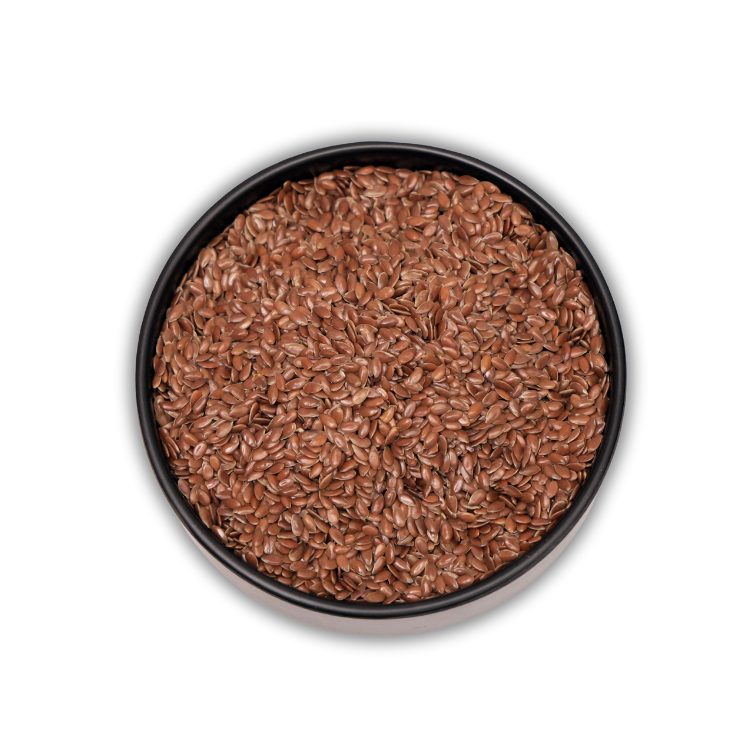
Both seeds are fine raw, which is not true of every seed - no soaking or grinding is needed, unlike flax.
How much, and the five-seed shortcut
One 30-gram handful a day, of either or both. That is about two heaped tablespoons.
For most households the sensible answer is not to choose. A five-seed mix - pumpkin, sunflower, flax, melon and sesame together - covers the ground that any single jar leaves open, and one spoon of it over curd or a salad does more than a spoon of any one seed would.
If you are buying single jars and only have room for one, pumpkin. The magnesium and zinc are the things most worth adding.
Buying it in Salumbar
Our seeds is on this site with the weight and the price on every pack. Order before 5 PM and it reaches you the same day inside Salumbar, free over ₹200. We have been on Sadar Bazar since 1961. If you would rather just say what you want, send it on WhatsApp and we will confirm the price before we pack anything.
Questions people ask
Which is healthier, pumpkin or sunflower seeds?
Pumpkin, on most counts - more protein, considerably more magnesium, more zinc and iron. Sunflower wins clearly on vitamin E, and on price.
How many pumpkin seeds a day?
A 30-gram handful, about two heaped tablespoons. More is not harmful, just unnecessary and calorie-dense.
Should seeds be roasted or raw?
Either. Roasting improves the taste and shortens the shelf life. Neither seed needs soaking or grinding, which is their main advantage over flax.
Do pumpkin seeds help with hair fall?
They carry zinc and iron, and deficiency in either can contribute to hair loss. If you are not deficient, adding seeds will not do anything. Worth a blood test before a diet change.
Are these the same as magaj seeds?
No. Magaj are melon seeds - muskmelon or watermelon - and are a different seed again, used mostly ground into sweets and gravies.
How should seeds be stored?
Airtight jar, away from the stove and out of sunlight. Raw keeps about a year; roasted about six months.


 (1).jpg)