This is not a scam and nobody is being cheated - cassia is a real, legitimate, delicious spice that Indian cooking has used for centuries. But it is not the same plant as the cinnamon sold in Europe, it tastes different, and there is one genuine reason to know which you have.
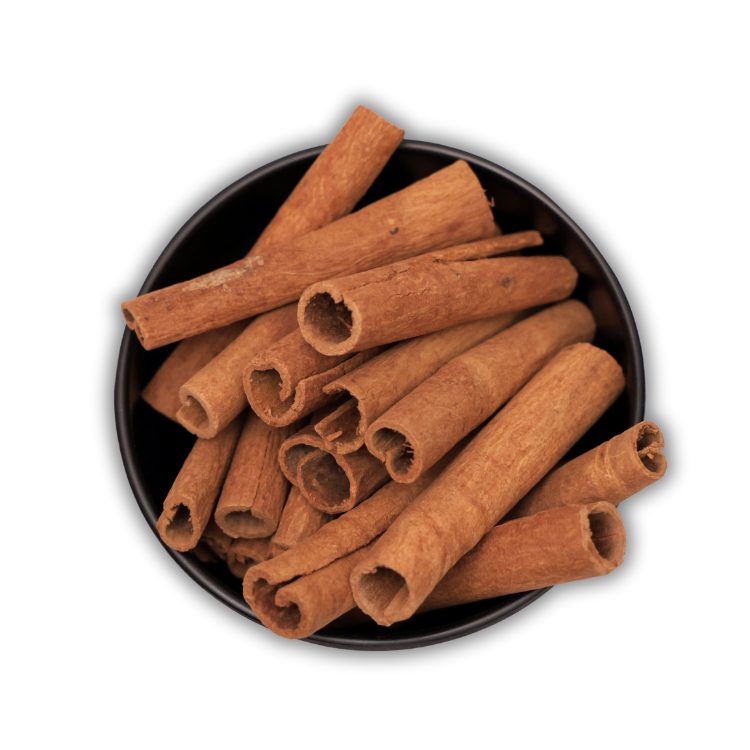
Short answer: Hold the stick up. True cinnamon is thin, brittle and rolled in many papery layers like a cigar. Cassia is a single thick curl, hard enough that you cannot crumble it. Most Indian dalchini is cassia.
The two-second test
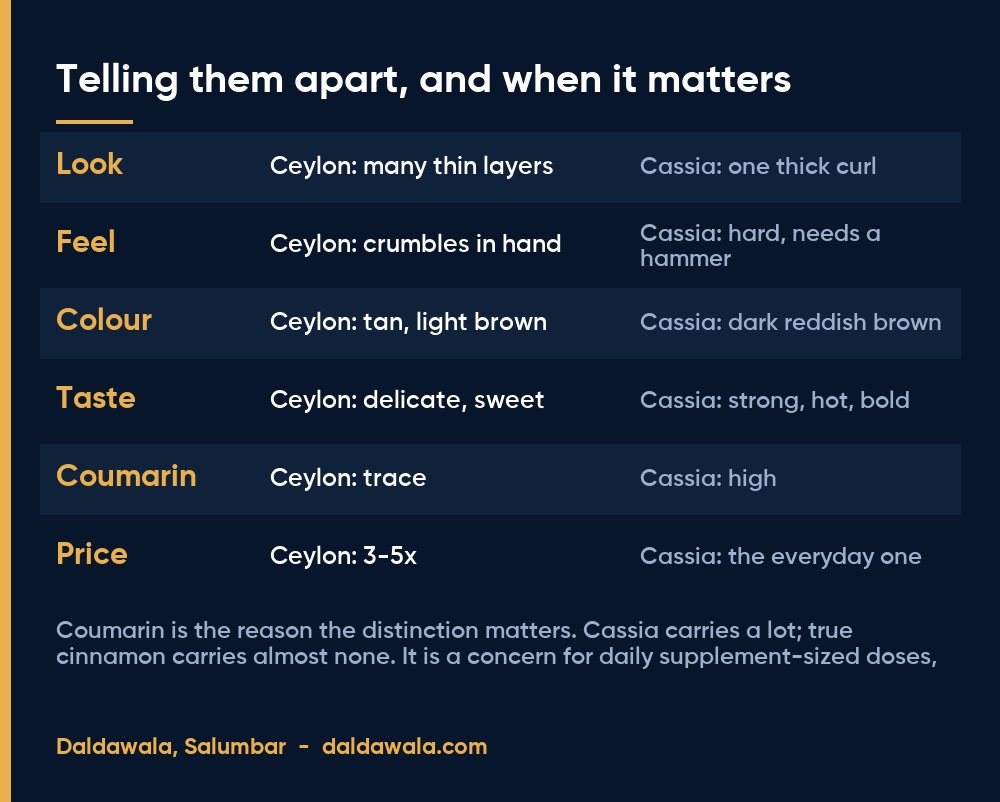
Pick up a stick and look at the end of it. True cinnamon - Ceylon cinnamon, from Sri Lanka - is made of many thin, papery layers rolled tightly together, like a rolled-up newspaper. It is brittle enough that you can crumble a piece between your fingers.
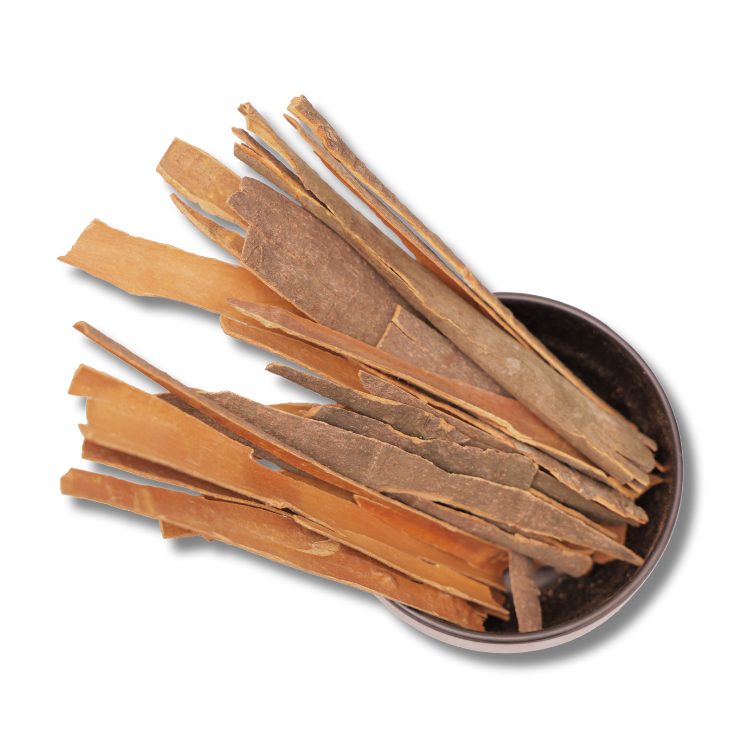
Cassia is a single thick slab of bark curled over on itself, usually darker and distinctly reddish. It is hard. You cannot break it by hand, and grinding it at home will test a mixie.
That is the whole test, and it is reliable. No smelling, no tasting, no label needed.
Why both are in Indian kitchens
Cassia is bolder, hotter and stands up to long cooking, which is exactly what you want in a biryani, a korma or a garam masala. Ceylon is more delicate and more floral, and in a heavy gravy it simply disappears.
So the right answer is not "always buy Ceylon". For most Indian savoury cooking, cassia is the correct spice and always has been. Ceylon comes into its own in desserts, in tea, in anything milk-based, and anywhere the cinnamon is meant to be tasted rather than felt.
Vietnamese cassia, which several shops now stock, is the strongest of the lot - noticeably more intense than Chinese or Indonesian cassia, and worth buying if you like a forward cinnamon.
The coumarin question, honestly
Cassia carries coumarin, a compound that in large regular amounts can stress the liver. Ceylon carries only traces.
How much is a problem? European food safety guidance puts the tolerable daily intake at 0.1 mg per kg of body weight - for a 60 kg adult, 6 mg a day. A gram of cassia powder can carry between 2 and 9 mg depending on the source.
So: a stick in a pot of biryani that feeds six is nowhere near a concern. A teaspoon of cassia powder stirred into warm water every morning as a health habit, for months, is in the range worth thinking about. If you are taking cinnamon daily and deliberately, that is the case for buying Ceylon.
Buying it well
Buy sticks, not powder. Powdered cinnamon of either kind loses its aroma within a couple of months, and powder is also where the two get mixed without anyone being able to tell.
For sticks, look for a dry, clean break with no mustiness. Smell the jar - good cassia announces itself immediately; a jar that smells of dust has been open too long.
Keep them whole in an airtight container and grind what you need. A whole stick in an airtight jar will still be good in two years; ground cinnamon is tired in three months.
Buying it in Salumbar
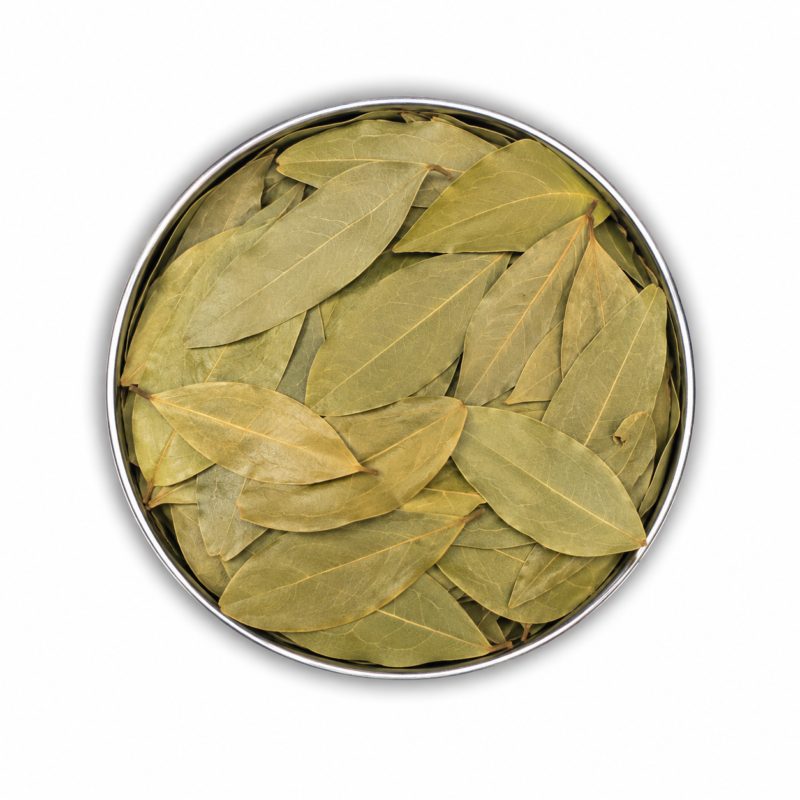
Our spices is on this site with the weight and the price on every pack. Order before 5 PM and it reaches you the same day inside Salumbar, free over ₹200. We have been on Sadar Bazar since 1961. If you would rather just say what you want, send it on WhatsApp and we will confirm the price before we pack anything.
Questions people ask
Is cassia cinnamon fake?
No. It is a real spice from a related tree, and it is what Indian cooking has used for centuries. It is simply a different species from Ceylon cinnamon.
How do I tell Ceylon from cassia?
Look at the end of the stick. Ceylon is many thin papery layers and crumbles in your hand. Cassia is one thick hard curl you cannot break.
Is cassia dangerous?
Not in cooking amounts. The coumarin content is a consideration if you are taking a teaspoon of cinnamon powder daily as a health routine, in which case buy Ceylon.
Which cinnamon for biryani?
Cassia. It is bolder and stands up to long cooking. Ceylon would disappear.
Which cinnamon for desserts and tea?
Ceylon, if you have it. It is more delicate and more floral, and in a milk-based sweet the difference is clear.
Should I buy cinnamon powder or sticks?
Sticks. Powder loses its aroma within a couple of months, and powder is where the two types get blended indistinguishably.


 (1).jpg)