Most dry fruit and spice shops in Rajasthan carry a small shelf of things that are neither dry fruit nor spice: dried roots, bark, lichen, odd-looking pieces of plant. They divide fairly cleanly into two groups, and it is worth knowing which is which.
Short answer: Pathar phool is a culinary ingredient - a lichen used in Maharashtrian and Hyderabadi masalas. Safed musli and piplamool are traditional medicines, not cooking ingredients, and the claims around them are not settled science.
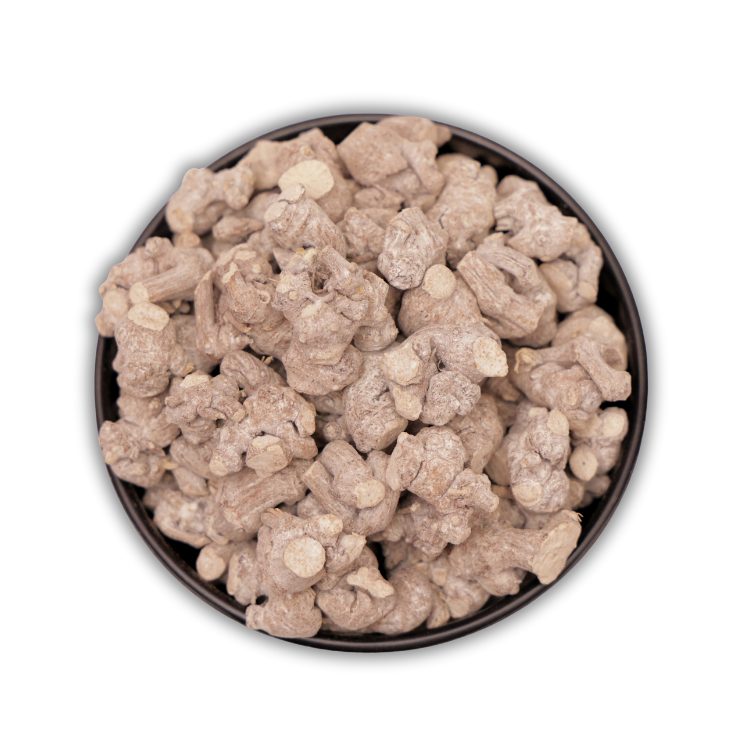
Pathar phool, which is actually a cooking ingredient
Pathar phool - dagad phool, stone flower - is not a flower at all. It is a lichen that grows on rocks and tree bark, dried and used as a spice.
It is central to Maharashtrian kala masala and goda masala, and turns up in Hyderabadi and Chettinad cooking. The taste is hard to describe - earthy, smoky, slightly musty in a good way - and it does something to a meat masala that nothing else does.
Use it whole, fried in oil at the start like other khada masala, or ground into a blend. A small piece goes a long way; it is assertive in quantity.
Look for pieces that are pale grey-brown and papery rather than dark and gritty. It is light, so a hundred grams is a very large quantity for a household - twenty or thirty grams is a sensible buy.
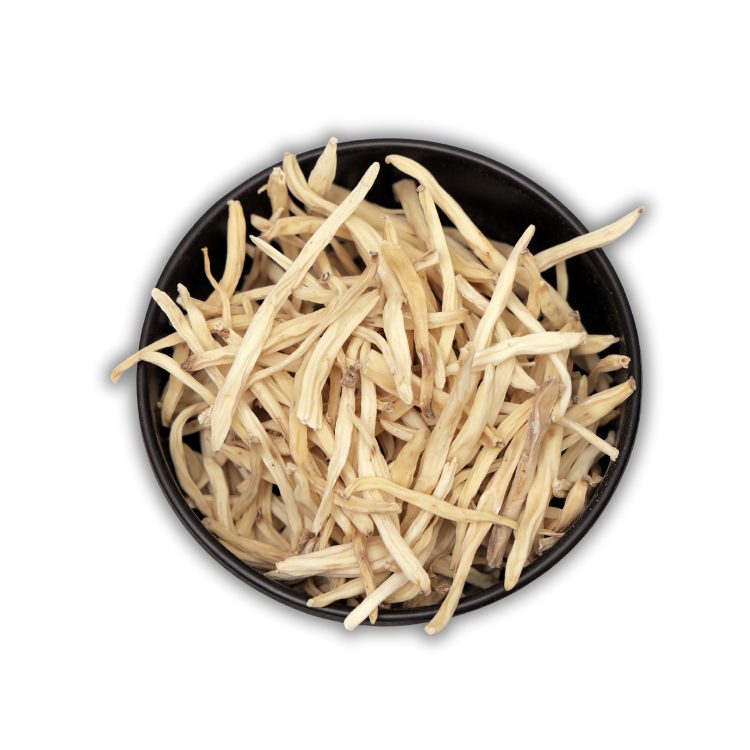
Piplamool, between the two
Piplamool is the root of the long pepper plant - pippali. The fruit, pippali itself, is a spice; the root is used mainly in Ayurvedic preparations, often for respiratory complaints and digestion.
It has a sharp, peppery, slightly bitter taste and does turn up in a few regional masalas, though rarely in home cooking.
As a culinary item it is a curiosity. As a medicine it is part of a long tradition with the usual caveat: traditional use is evidence of long use, not evidence of effect, and the clinical research is thin.
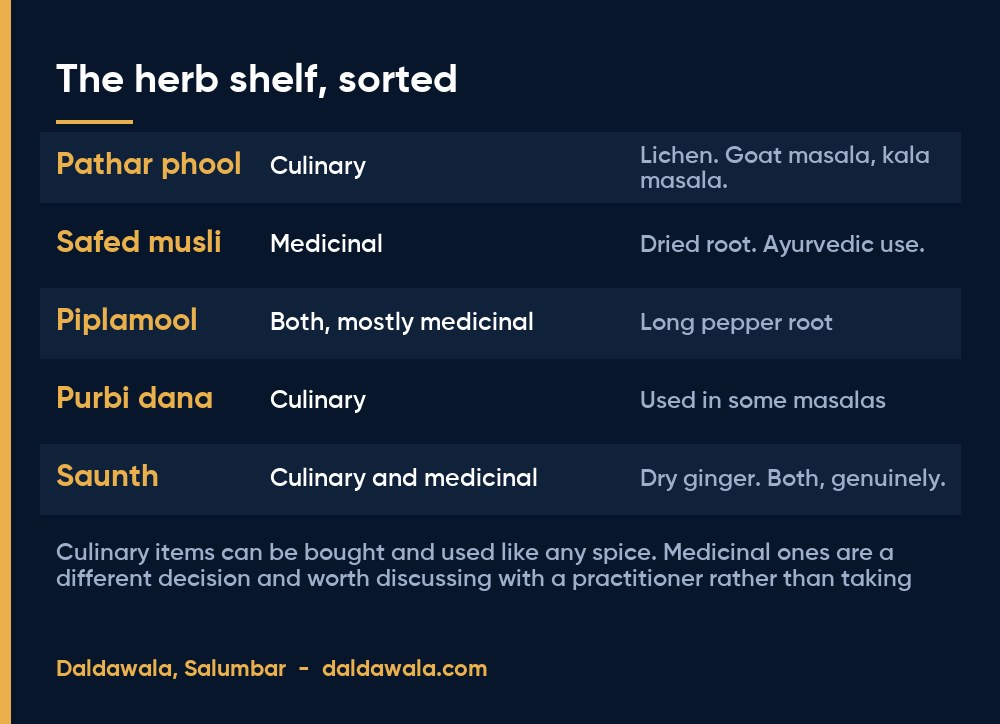
Safed musli, and the honest version
Safed musli is the dried tuberous root of Chlorophytum borivilianum, and it is sold widely with claims around strength, stamina and male sexual health.
Here is the honest position. It has a genuine place in Ayurveda. There is some animal research and a small number of small human studies, several of them of poor quality, and nothing approaching the kind of evidence that would support the claims made in its marketing.
It is not a food and it is not a cooking ingredient. People take it as a powder in milk, and it is widely available, and a shop selling it is selling a traditional preparation rather than making a medical claim about it.
If you are thinking of taking it for a specific problem, the right first step is a doctor or a qualified Ayurvedic practitioner, not a website - particularly if the problem is one that can have a serious underlying cause. Erectile difficulty, for example, is frequently the first visible sign of cardiovascular disease, and treating it with a root powder means not finding that out.
Buying from the herb shelf
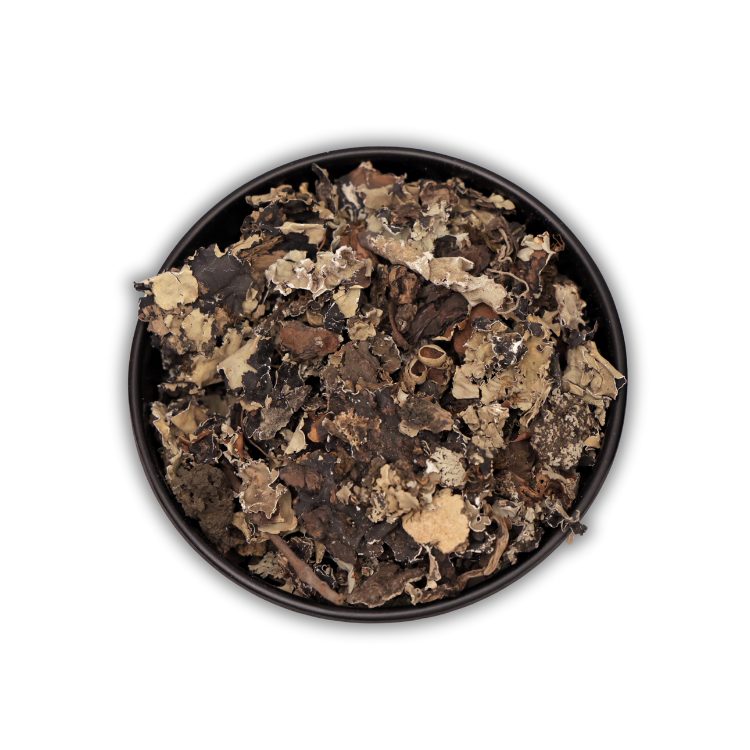
For culinary items - pathar phool, purbi dana, saunth - buy them the way you buy spices: small quantities, whole, smelled before weighing, kept airtight.
For the medicinal ones, the practical advice is to buy small and recent. Dried roots and powders lose whatever activity they have over time, and a kilo of anything from this shelf will outlast its usefulness in any household.
And ask what it is for rather than what it does. A shop can tell you how something is traditionally used, where it comes from and how to store it. Whether it will work for your particular problem is not a question a shop counter can answer honestly, and anyone who answers it confidently is selling rather than advising.
Buying it in Salumbar
Our mukhwas and herbs is on this site with the weight and the price on every pack. Order before 5 PM and it reaches you the same day inside Salumbar, free over ₹200. We have been on Sadar Bazar since 1961. If you would rather just say what you want, send it on WhatsApp and we will confirm the price before we pack anything.
Questions people ask
What is pathar phool?
A lichen, dried and used as a spice. It is central to Maharashtrian kala masala and goda masala and appears in Hyderabadi and Chettinad cooking. Earthy and smoky, and assertive in quantity.
Is pathar phool a flower?
No, despite the name. It is a lichen that grows on rocks and bark.
What is safed musli used for?
It is a traditional Ayurvedic preparation, usually taken as a powder in milk. The research behind the claims made for it is thin, and it is a conversation for a doctor or a qualified practitioner rather than a shop shelf.
Is piplamool the same as pippali?
Related. Pippali is the long pepper fruit, a spice; piplamool is the root of the same plant, used mainly in Ayurvedic preparations.
How much pathar phool in a masala?
A small piece - it is light and assertive. Twenty to thirty grams is a large household purchase.
How should these be stored?
Airtight, away from light and damp, like any dried spice. Buy small quantities; dried roots and lichens lose their character over a year.



 (1).jpg)