Star anise is the spice people add a second one of, because one looks like so little in a large pot. That instinct is wrong, and there is also a genuine reason to look at what you are buying.
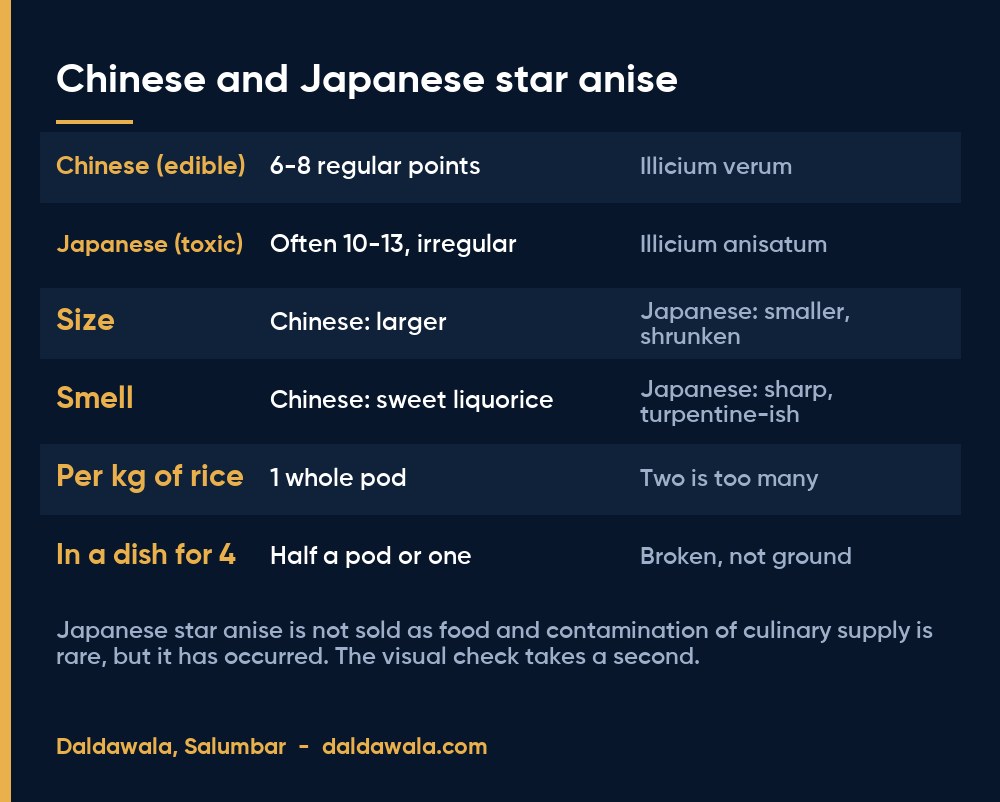
Short answer: Use one pod for a kilo of rice - star anise is one of the most assertive spices there is. And check the shape: Chinese star anise has six to eight regular points; the toxic Japanese species is smaller, more irregular, and smells sharper.
Why one pod is enough
Star anise is dominated by anethole - the same compound as in saunf, but at far higher concentration. It carries through long cooking almost undiminished, which is unusual, and it does not fade in a dish that simmers for an hour.
Which means the usual instinct - this looks like a small amount for a big pot, I will add another - produces a biryani that tastes of liquorice. The spice does not need volume to reach the whole dish.
One whole pod per kilo of rice. For a dish serving four, half a pod or one, broken rather than ground, added whole to the hot fat with the other khada masala.
And almost never in anything delicate. Star anise in a light dal or a simple sabzi will be the only thing anyone tastes.
The safety note, in proportion
Illicium anisatum - Japanese star anise - looks similar to the edible Chinese species and contains anisatin, a neurotoxin that causes seizures. It is not sold as a culinary spice, but contamination of culinary supply has been documented, most notably in cases involving star anise tea given to infants.
This is not a reason to be frightened of star anise. It is a reason to look at what you buy, which takes a second:
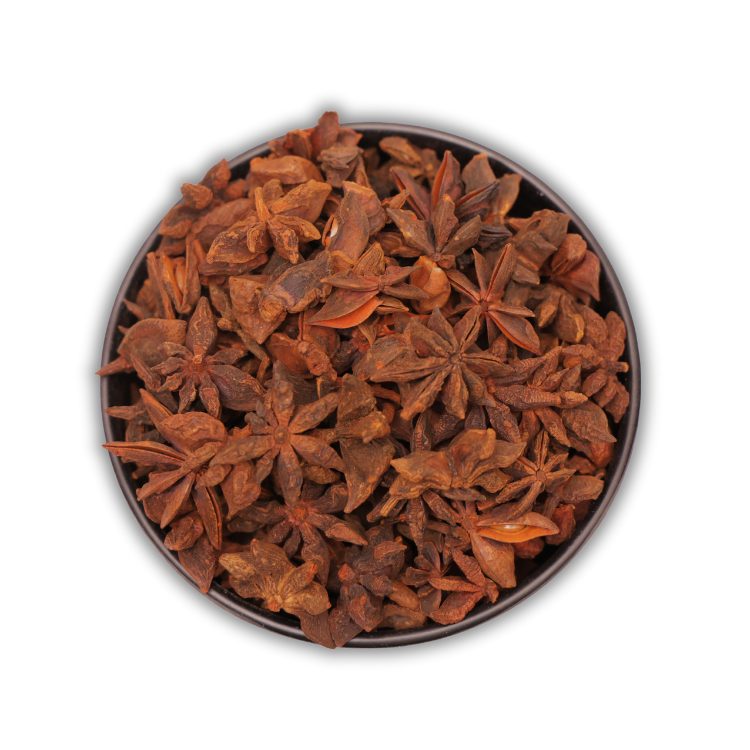
Chinese star anise has six to eight points, regular and plump, each holding one shiny brown seed, and it smells sweetly of liquorice. Japanese star anise is smaller, often has more points, the points are irregular and shrunken, and the smell is sharper and more like turpentine than liquorice.
Buy whole pods, not ground - ground star anise makes this check impossible, and that is where contamination would be undetectable.
Where it belongs
Biryani and pulao. One pod, into the hot ghee at the start with the tej patta and dalchini.
Slow-cooked meat. Nihari, korma, anything braised for an hour. Star anise is at its best where it has time.
Garam masala. A small amount in the blend, though many traditional north Indian blends leave it out entirely.
Chai, occasionally. Half a pod in a pot, usually in winter. It is assertive but pleasant against milk.
Where it does not belong: light dals, simple sabzis, anything with delicate spicing, and sweets.
Buying and keeping
Look for whole, unbroken pods with the points intact and the seeds still in place. Broken pods are fine to cook with and are usually cheaper, but you lose the ability to check the shape, which is the one visual safeguard there is.
Smell the jar. Good star anise announces itself immediately with a sweet liquorice smell. A jar that smells faintly, or sharply, is one to leave.
Whole pods keep two years or more in an airtight jar away from light, which makes a hundred grams a long-term purchase. Ground star anise is flat within a couple of months and should not be bought anyway.

Buying it in Salumbar
Our spices is on this site with the weight and the price on every pack. Order before 5 PM and it reaches you the same day inside Salumbar, free over ₹200. We have been on Sadar Bazar since 1961. If you would rather just say what you want, send it on WhatsApp and we will confirm the price before we pack anything.
Questions people ask
How much star anise in biryani?
One whole pod for a kilo of rice. It is one of the most assertive spices there is and two makes the dish taste of liquorice.
Is star anise toxic?
Chinese star anise, the culinary one, is not. A related species, Japanese star anise, contains a neurotoxin and is not sold as food - but contamination has occurred, which is why buying whole pods and checking the shape matters.
How do I tell the two apart?
Chinese has six to eight regular, plump points and smells sweetly of liquorice. Japanese is smaller with more irregular, shrunken points and smells sharp, closer to turpentine.
Should I buy star anise whole or ground?
Whole. Ground makes the visual check impossible and loses its aroma within a couple of months anyway.
Can star anise go in chai?
Half a pod in a pot works and is pleasant in winter. More than that and the chai tastes of liquorice.
Is star anise the same as saunf?
No. Both contain anethole, which is why they smell related, but they are unrelated plants and star anise is far stronger.



 (1).jpg)