This is the most searched question a dry fruit shop gets asked, and the honest answer is uncomfortable: it depends entirely on why the hair is falling, and most people do not know why.
Short answer: Seeds supply zinc, iron and ALA. If your hair fall is caused by a deficiency in one of those, correcting it helps - and if it is not, no amount of seeds will do anything. A blood test is the cheap first step.
The honest framing
Hair fall has many causes. Iron deficiency, thyroid problems, protein shortfall, vitamin D deficiency, hormonal conditions like PCOS, post-illness shedding, post-partum shedding, and plain genetic pattern hair loss, which is by far the most common and is not a nutrition problem at all.
A seed fixes exactly one of these: a deficiency in something the seed contains. If your hair fall is from thyroid or genetics, you can eat pumpkin seeds for a year and nothing will change.
Which is why the first step is a blood test - iron, ferritin, vitamin D, thyroid, B12 - and not a grocery purchase. It costs a few hundred rupees, it is available in Salumbar, and it tells you whether the jar on the counter is relevant to your problem.
A shop that tells you otherwise is selling you seeds.
Where seeds genuinely help
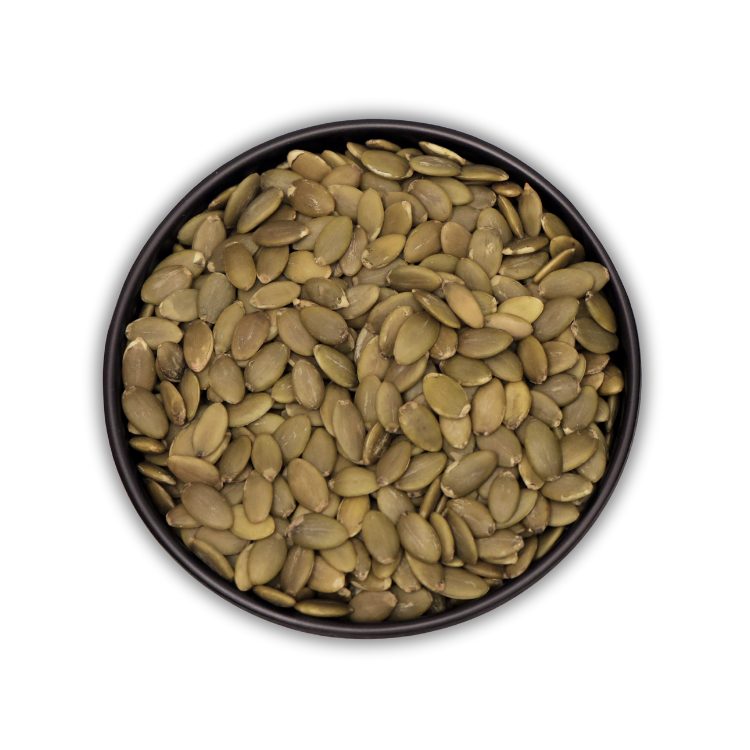
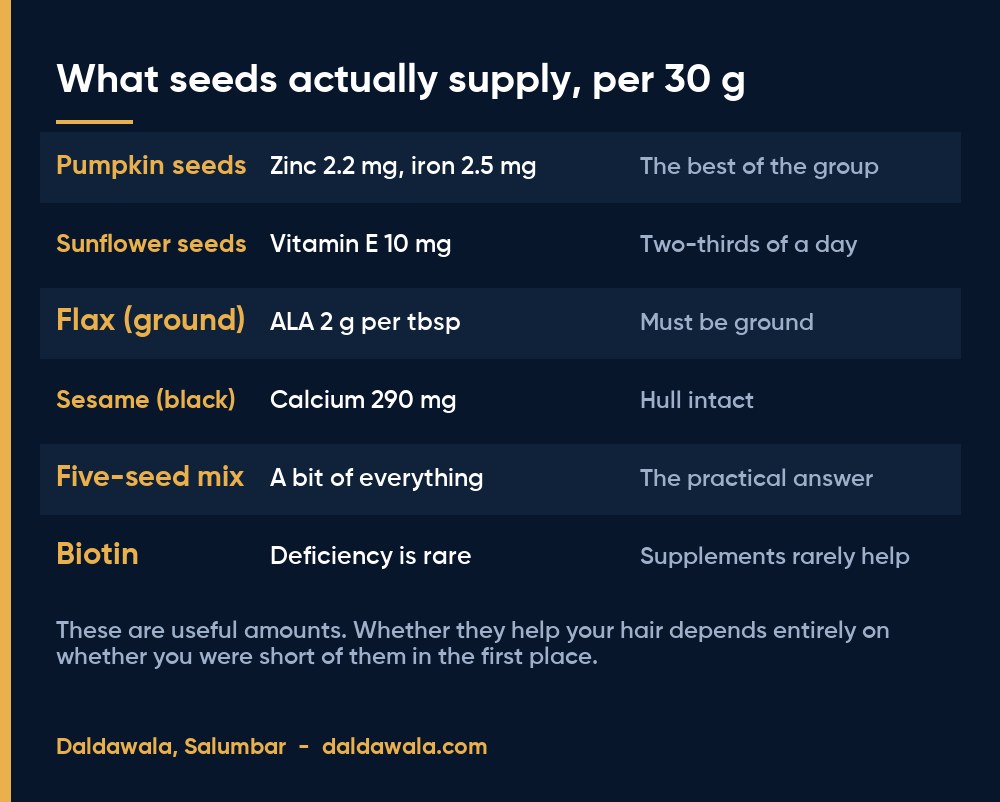
Iron deficiency is a common and under-diagnosed cause of hair shedding, particularly in Indian women. Pumpkin seeds carry a useful amount, and so do kishmish, kharak and anjeer. But if you are genuinely deficient, food alone will usually not close the gap - supplements will, and that is a doctor's call.
Zinc deficiency also causes shedding and is less common. Pumpkin seeds are among the better food sources.
Protein shortfall is real in a lot of Indian vegetarian diets. Seeds and nuts contribute, though dal, curd and paneer do more.
In each case the seeds are a contribution, not a treatment. They work alongside whatever the actual answer is.
What does not hold up
Biotin. Biotin supplements for hair are sold enormously and biotin deficiency is genuinely rare in people eating a normal diet. If you are not deficient, extra biotin does nothing - and it is worth knowing that high-dose biotin interferes with several common blood tests, including thyroid and cardiac markers, which has caused real misdiagnoses.
Onion juice, rice water, and the rest. Thin evidence, enthusiastic internet. Harmless, mostly, and not a treatment.
Any single food as a cure. There is no food that regrows hair. The mechanism by which nutrition affects hair is through not being short of things, and once you are not short, more does not help.
The sensible version
Get the blood test. Take whatever it indicates, under a doctor.
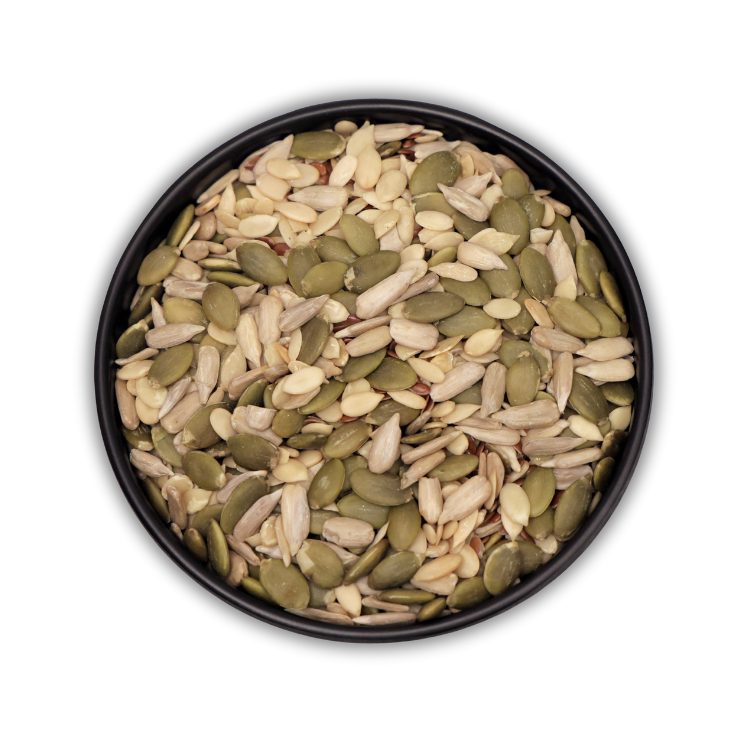
Separately, and regardless: a daily spoon of mixed seeds over curd is a genuinely good habit. It adds zinc, magnesium, iron, vitamin E and ALA to a diet that is often short of all of them, it costs very little, and it takes ten seconds.
Do that because it is a good thing to do, not because it will fix your hair. If your hair fall turns out to be an iron deficiency, you will be glad you were eating them. If it turns out to be thyroid, you will still be glad - just for other reasons.
And if hair fall is sudden, patchy, or accompanied by anything else, that is a dermatologist, not a diet.
Buying it in Salumbar
Our seeds is on this site with the weight and the price on every pack. Order before 5 PM and it reaches you the same day inside Salumbar, free over ₹200. We have been on Sadar Bazar since 1961. If you would rather just say what you want, send it on WhatsApp and we will confirm the price before we pack anything.
Questions people ask
Do pumpkin seeds stop hair fall?
Only if the hair fall is caused by a zinc or iron deficiency that they help correct. For genetic, thyroid or hormonal hair loss, they do nothing.
Which seeds are best for hair?
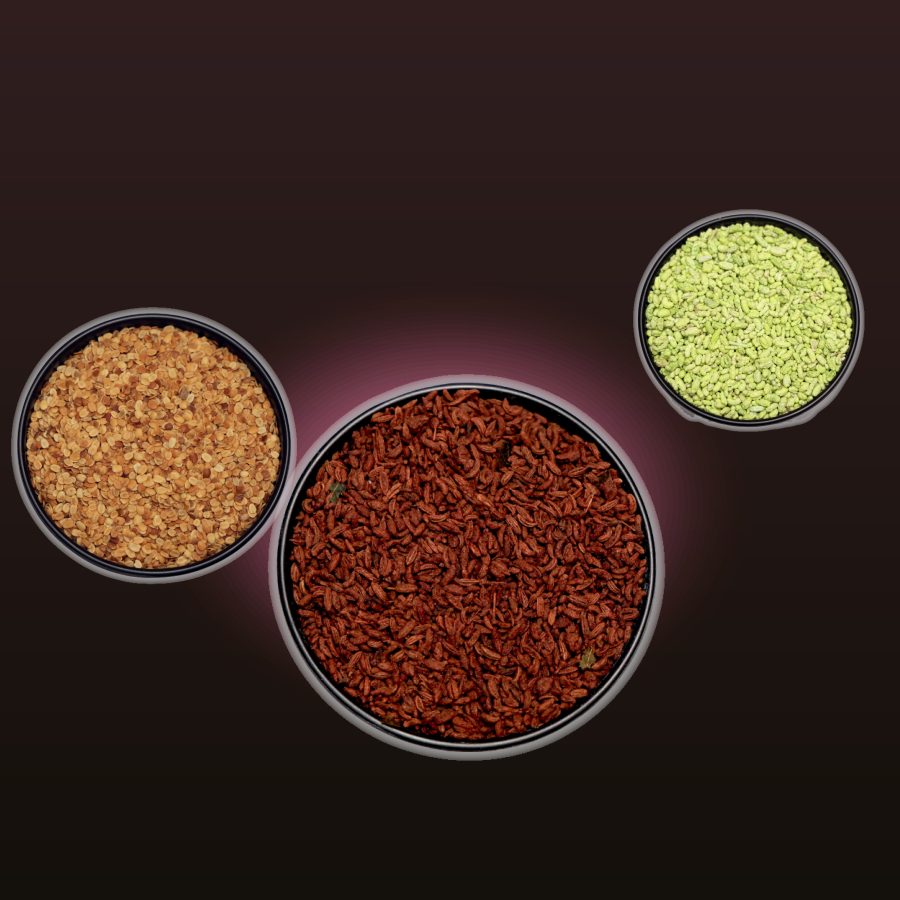
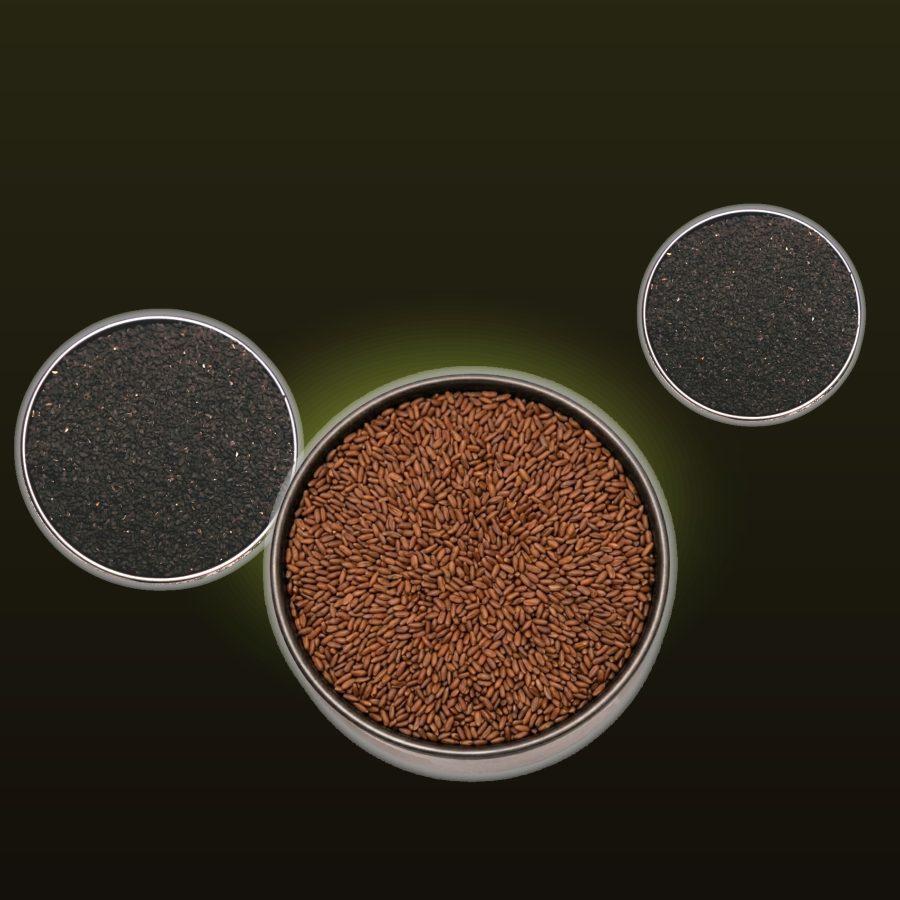
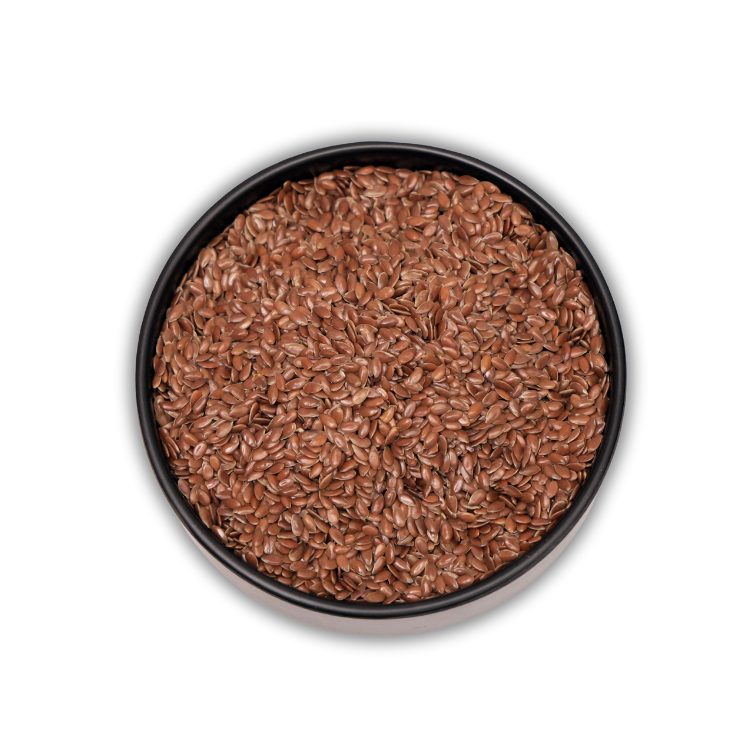
Pumpkin for zinc and iron, flax for ALA, black sesame for calcium. A mixed five-seed spoon covers most of the ground.
Should I take biotin for hair?
Biotin deficiency is rare in people eating normally, and supplements do nothing if you are not deficient. High doses also interfere with several common blood tests.
How long before seeds show an effect?
If a deficiency is the cause and it is being corrected, hair responds slowly - three to six months. If a deficiency is not the cause, never.
What should I do first about hair fall?
A blood test - iron and ferritin, vitamin D, thyroid, B12. It costs a few hundred rupees and tells you whether diet is even relevant.
How many seeds a day?
A 30-gram handful, or two heaped tablespoons of a mix, over curd or a salad. More is not better.


 (1).jpg)