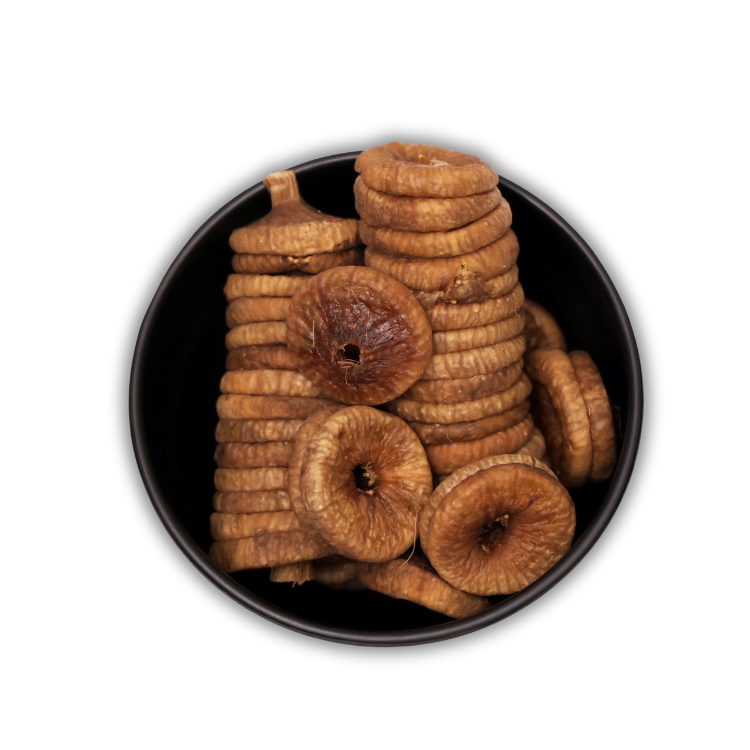
Anjeer is the dry fruit people buy for one specific reason and then eat wrong. The reason is usually fibre. The wrong part is eating three hard ones on an empty stomach and wondering why it was uncomfortable.
Short answer: Two to three anjeer a day. Soaking overnight softens them and makes the fibre work more gently - which matters, because dried figs carry more fibre per gram than almost anything else in a dry fruit shop.
The white powder is not mould
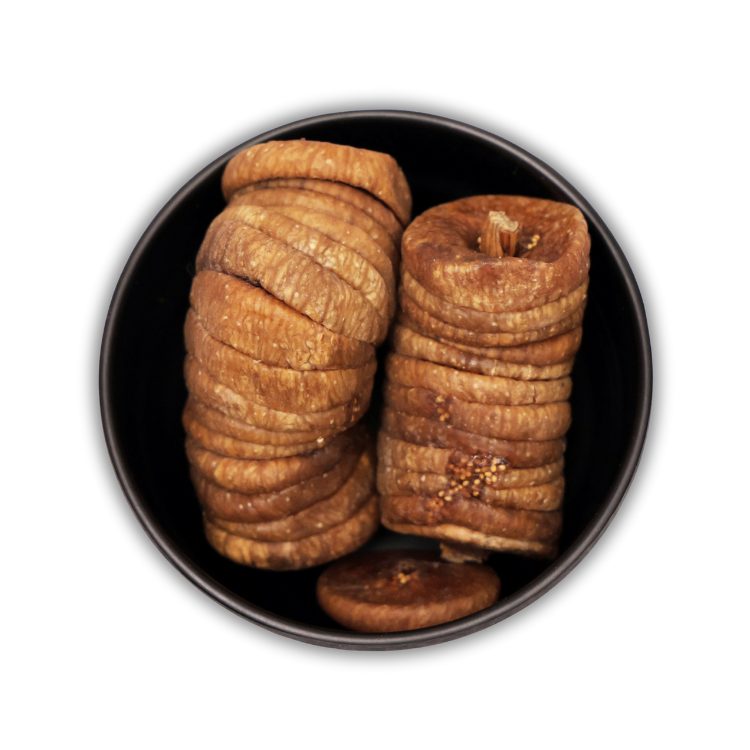
Dried figs often develop a fine white bloom on the surface, and it worries people enough that perfectly good figs get thrown away.
It is sugar. As the fig dries, natural sugars migrate to the surface and crystallise there, exactly as they do on a date or a raisin. It is a sign the fruit is properly dried, not a sign of spoilage.
What mould looks like is different: fuzzy rather than powdery, usually greenish or grey, and concentrated in patches rather than evenly spread. It also smells, which sugar bloom does not. If in doubt, smell it - a good anjeer smells sweet and faintly jammy.
Why soaking matters here more than elsewhere
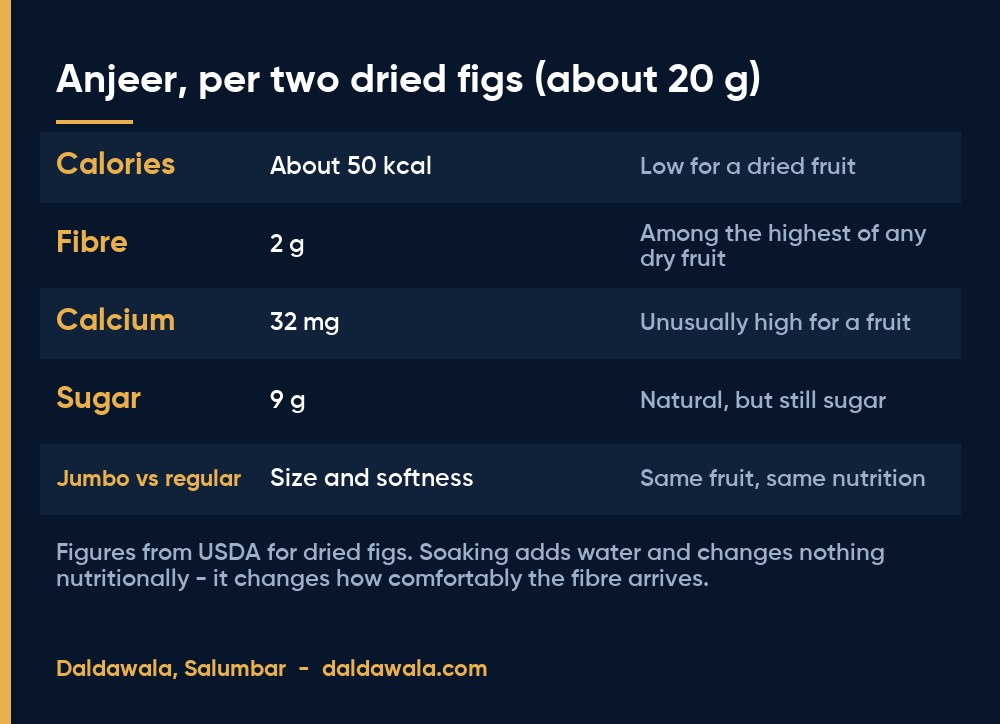
Dried figs are dense in fibre - roughly a gram per fig, which is a lot for something that size. That fibre is largely why people buy them, and it is also why eating several dry ones at once can be uncomfortable.
Soaking overnight in water or milk rehydrates the fruit so the fibre arrives already carrying water rather than drawing it out of you. The fig also softens considerably and the taste becomes milder and less intensely sweet.
If you are eating anjeer as a sweet, dry is fine and tastes better. If you are eating it for the fibre, soak it.
How many, and when
Two to three a day. That is about 50 to 75 calories and two to three grams of fibre, which is a meaningful contribution to a day without being the whole plan.
Soaked figs are usually eaten first thing, which works. Dry figs are better in the afternoon when you want something sweet. The one time to avoid them is late at night in quantity, because a sudden large dose of fibre before sleeping is nobody's friend.
They also carry a genuinely useful amount of calcium for a fruit, which is why anjeer turns up in advice for people who do not take dairy.
Jumbo or regular?
Jumbo anjeer are larger and softer and cost noticeably more per kilo. Nutritionally they are identical - same fruit, graded by size.
Buy jumbo if the figs are going on a plate, into a gift box, or being eaten as a treat where the size and softness are the pleasure. Buy regular for soaking, for chopping into a ladoo or a kheer, and for the daily two.
What matters more than grade is softness. A good dried fig gives when you press it. One that is hard and leathery has either been over-dried or sat too long, and no amount of soaking will fully bring it back.
Buying it in Salumbar
Our dry fruits is on this site with the weight and the price on every pack. Order before 5 PM and it reaches you the same day inside Salumbar, free over ₹200. We have been on Sadar Bazar since 1961. If you would rather just say what you want, send it on WhatsApp and we will confirm the price before we pack anything.
Questions people ask
How many anjeer should I eat a day?
Two to three. That is about 50 to 75 calories and two to three grams of fibre.
Should anjeer be soaked?
Soak it if you are eating it for the fibre or for digestion - it arrives more gently. Eat it dry if you are eating it as a sweet, where it tastes better.
What is the white powder on dried figs?
Crystallised natural sugar that migrates to the surface as the fruit dries. It is a sign of good drying, not mould. Mould is fuzzy, patchy and smells.
Is anjeer good for constipation?
It is high in fibre and traditionally used for exactly this. Soak two overnight and have them in the morning with water. If the problem persists, it is a doctor's question, not a fig's.
Jumbo or regular anjeer - which is better?
Same fruit, graded by size. Jumbo for a plate or a gift; regular for soaking and cooking. Softness matters far more than size.
How should anjeer be stored?
Airtight, in the fridge through summer. They are moist enough to attract insects and to go hard if left open.



 (1).jpg)