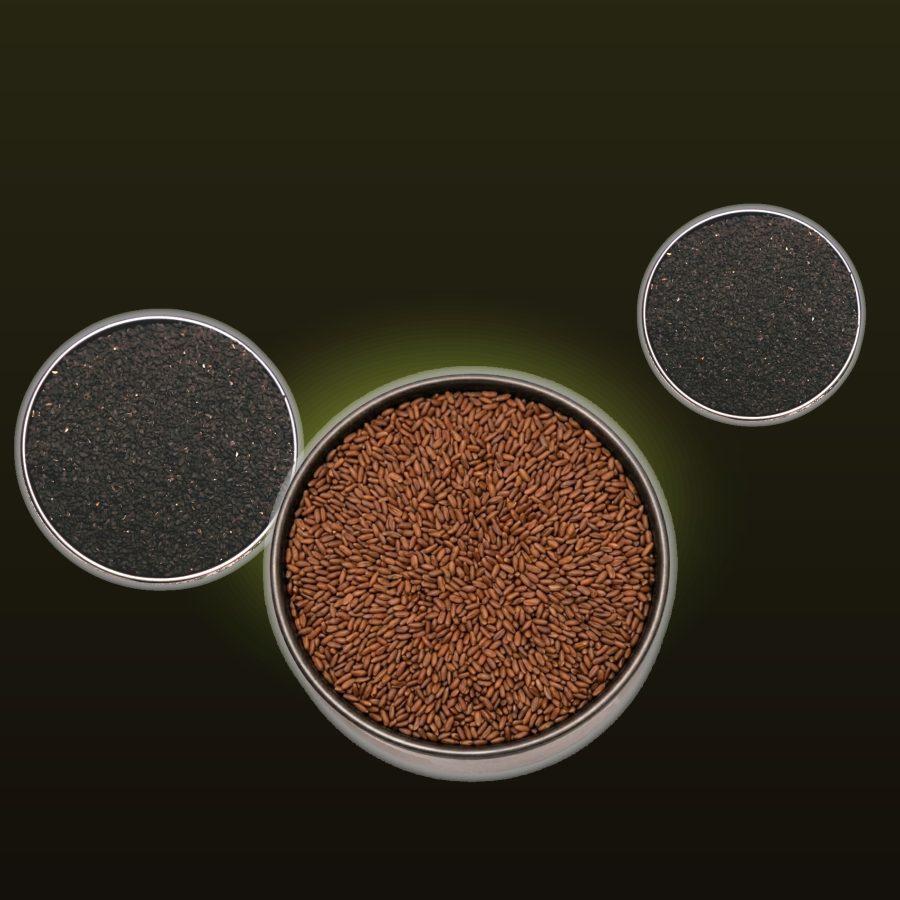
Three jars on a shop counter, all of them dried grapes, all of them often described as "raisins" in English, and all of them doing different jobs in an Indian kitchen.
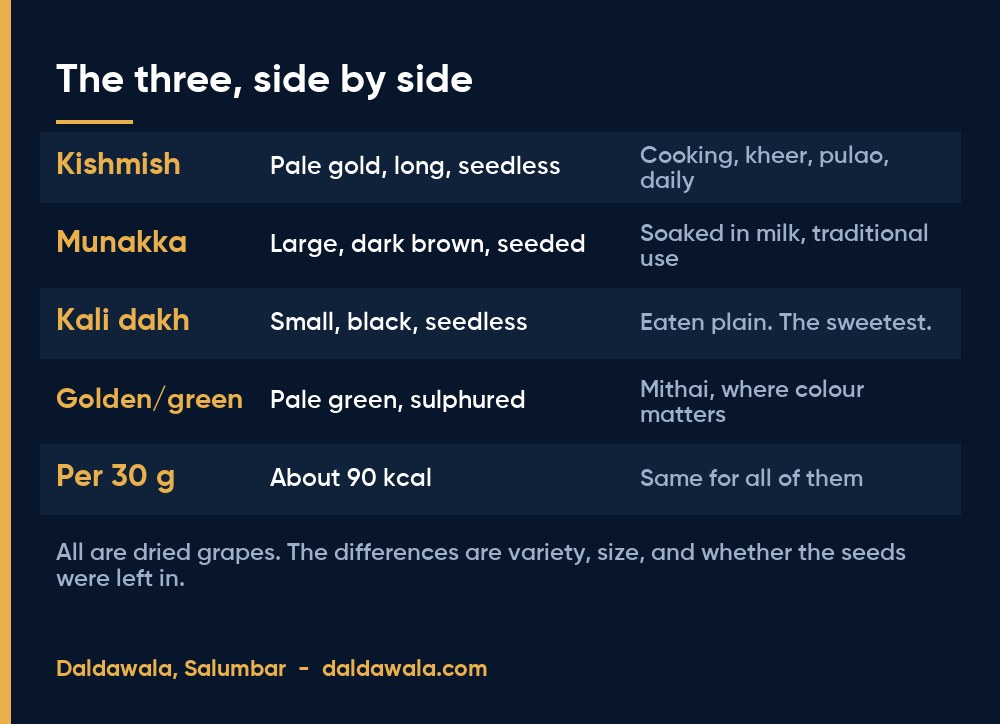
Short answer: Kishmish is the pale seedless raisin for everyday eating and cooking. Munakka is larger, darker, has seeds, and is the one traditional medicine uses. Kali dakh is a small black seedless raisin - sweeter, softer, and the best of the three eaten plain.
Kishmish: the everyday one
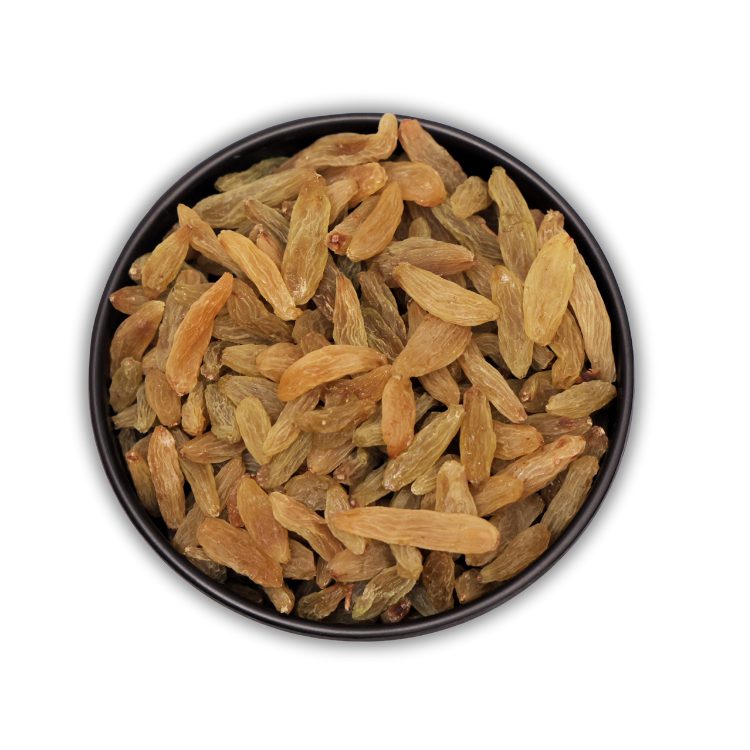
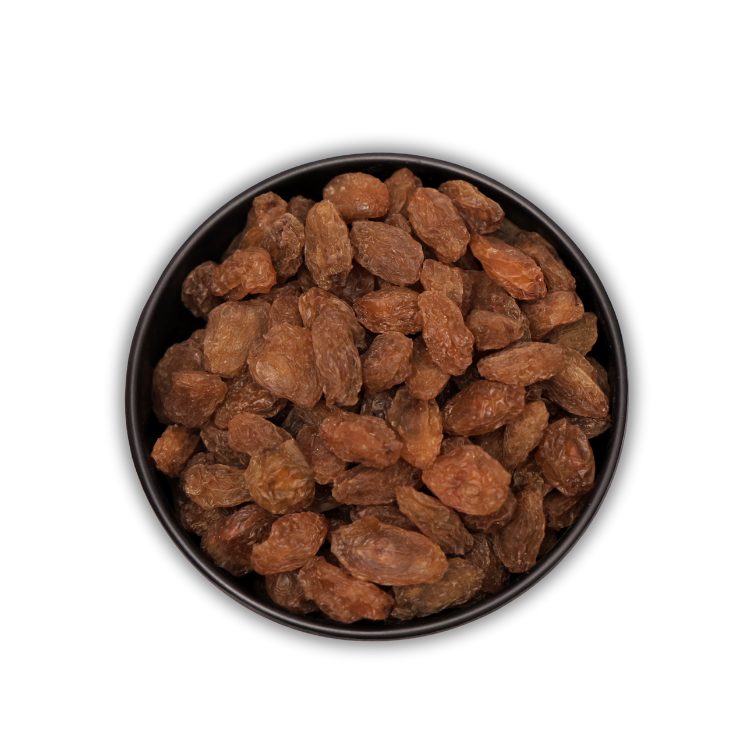
Pale gold, elongated, seedless, and the raisin that most recipes mean. It is the cheapest of the three by a clear margin and the most versatile - into kheer, into pulao, into a halwa, chopped into a ladoo.
Quality here is about plumpness and stickiness. A good kishmish gives when you squeeze it and is slightly tacky. Hard, dry, rattling raisins have been sitting too long and will stay hard in whatever you cook them into.
The very pale green ones are usually sulphur-treated to keep the colour, which is a standard and permitted process. They look better in mithai. Taste is essentially the same.
Munakka: the one with seeds
Munakka is a different grape - larger, darker, considerably more fleshy, and dried with the seeds left in. Those seeds are the whole reason it is a separate product.
In Ayurveda, munakka is the raisin of choice, usually soaked overnight in milk or water and eaten in the morning, and traditionally the seeds are removed before eating or left in depending on the purpose. It is the one prescribed for cough, for weakness, for anaemia.
How much of that holds up to modern scrutiny is a reasonable question, and the honest answer is: it is a dried grape with iron and fibre in it, like the others, and the tradition is older than the evidence. If you are eating munakka because your grandmother did, that is a perfectly good reason, and it will do you no harm.
Practically, it is also the best of the three for soaking - the flesh is thick enough to become genuinely plump rather than merely wet.
Kali dakh: the one to eat plain
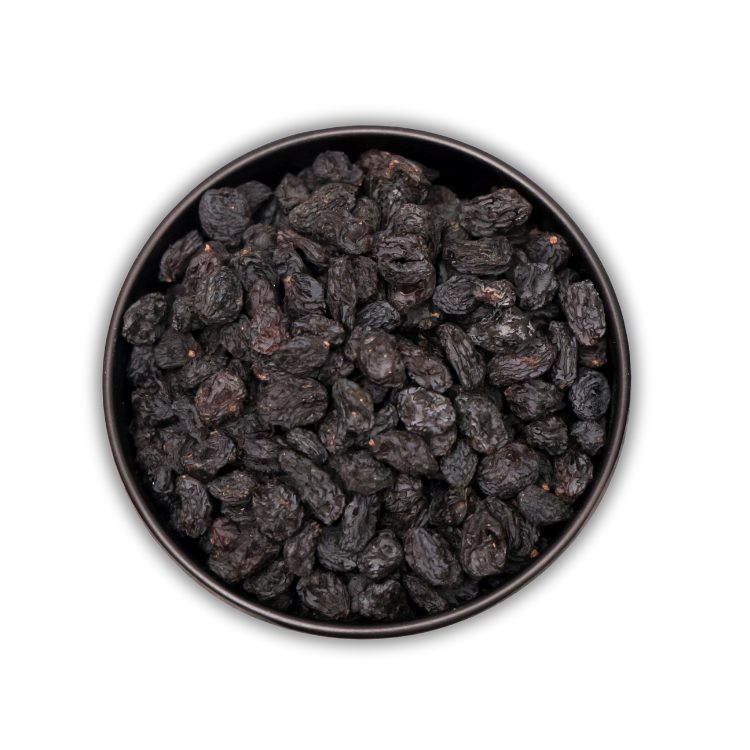
Small, properly black, seedless and noticeably sweeter and softer than kishmish. If you put a bowl of raisins on a table, this is the one that disappears.
It is also the one most often meant when people talk about black raisin water - a spoonful soaked overnight, the raisins eaten and the water drunk in the morning. Like most such habits, the mechanism is modest (it is fruit sugar, fibre and a little iron) and the ritual is pleasant, which is most of the value.
It costs more than kishmish and less than munakka, and for eating by the handful it is the best value of the three.
Storing all three
Raisins are moist, sugary and attractive to insects, which is a combination that does not keep well on an open shelf in Rajasthan.
Airtight jar, and in the fridge from March to September. They will keep six months to a year cold, and perhaps three months at room temperature before they either harden or attract something.
If they have gone hard, a few minutes in warm water will soften them enough to cook with, though not enough to enjoy plain. If you see any webbing in the jar, throw the lot - that is a moth, and it will have been through everything.
Buying it in Salumbar
Our dakh, kishmish and raisin is on this site with the weight and the price on every pack. Order before 5 PM and it reaches you the same day inside Salumbar, free over ₹200. We have been on Sadar Bazar since 1961. If you would rather just say what you want, send it on WhatsApp and we will confirm the price before we pack anything.
Questions people ask
What is the difference between kishmish and munakka?
Different grape varieties. Kishmish is pale, long and seedless; munakka is larger, darker and has seeds. Munakka is the one traditional medicine uses, usually soaked.
Should raisins be soaked?
They do not need to be. Soaking makes them plumper and gentler on the stomach, and is the traditional way munakka is taken. For cooking or snacking, dry is fine.
Are black raisins better than yellow?
Sweeter and softer, and better eaten plain. Nutritionally there is very little between them.
What is kali dakh?
A small black seedless raisin - sweeter and softer than kishmish, and the best of the common raisins for eating by the handful.
Does raisin water do anything?
It is fruit sugar, a little fibre and a little iron in water. Pleasant, harmless, mildly useful. Treat the stronger claims with scepticism.
How should raisins be stored?
Airtight, and in the fridge through the hot months. At room temperature in a Rajasthani summer they harden or attract moths within a few months.



 (1).jpg)